Putting off a roof installation decision after picking the wrong material does not freeze the damage. It usually turns a manageable correction into deck rot, code headaches, and a much more expensive replacement.
What really happens when you delay fixing a bad roofing material choice?
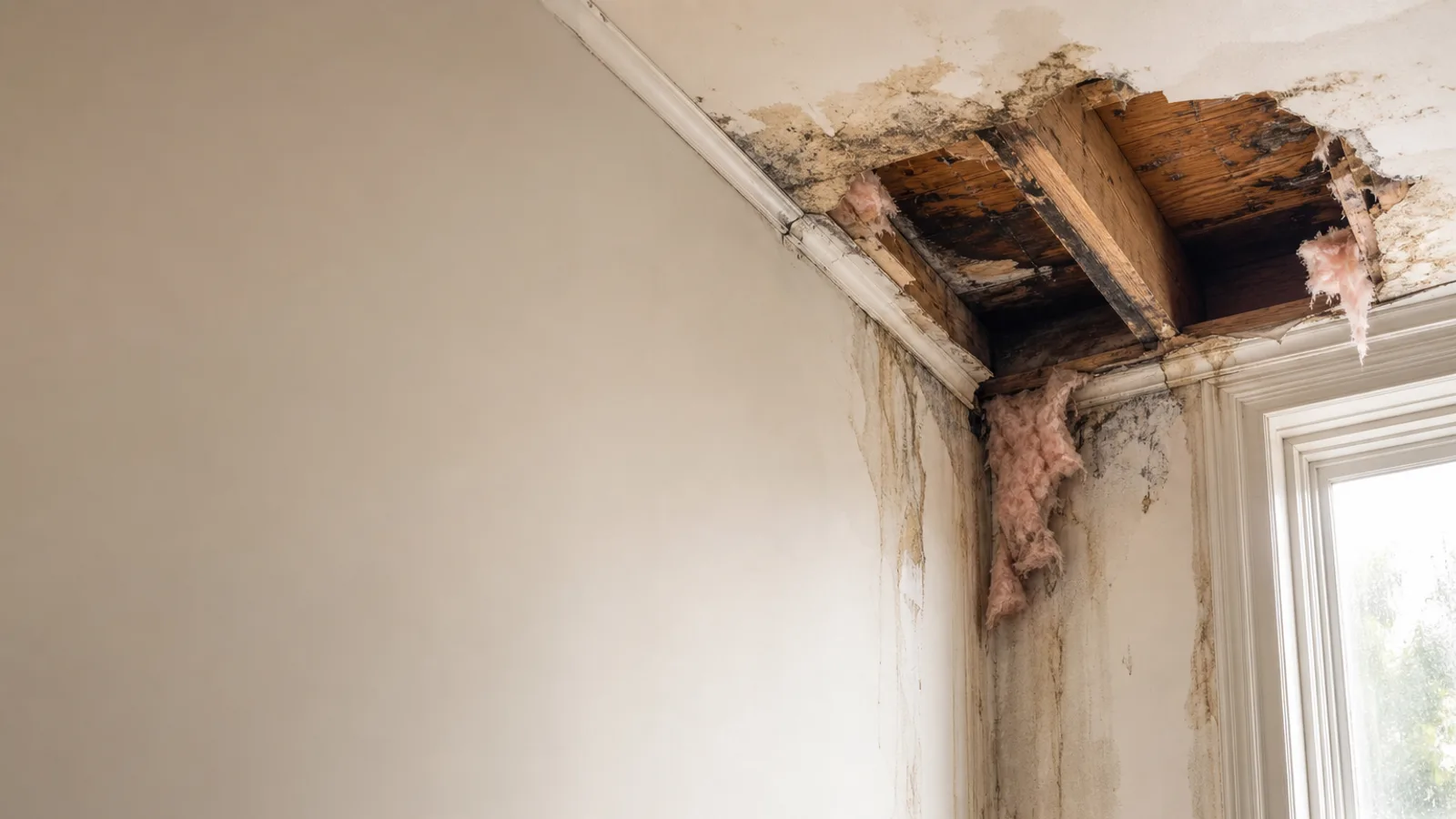
When the roofing material is a bad fit for your home and climate, time is not on your side. The problems rarely stay on the surface. As moisture finds its way through loose shingles, lifted metal panels, or swelling wood, it works into your roof deck, insulation, and eventually your ceilings and walls. Contractors see this all the time after storms in Pennsylvania, New Jersey, and Maryland: a roof that could have been corrected with targeted work turns into a full tear off once water has been getting in for a few seasons.
Trade guidance on storm‑related roof issues explains how small openings, such as punctures or loose coverings, often start out as relatively modest repairs. If they are not handled quickly, water intrusion, structural decay, and interior damage follow, and the job can grow into a full replacement costing many times more than the early repair would have been. Municipal guidance from building departments also notes that once you cross from minor work into a full replacement, you usually trigger modern code and permitting requirements that add time and complexity. That is the real cost of waiting when the roofing material itself is part of the problem.
- Moisture intrusion slowly spreads beyond the first damaged spot
- Roof deck and framing can weaken as water is absorbed
- Interior finishes like drywall and flooring often become damaged
- Delayed work is more likely to trigger full replacement and permits
How using the wrong roofing material shortens service life and raises lifetime cost
Roofing does not fail on a simple calendar. It fails when the material and installation do not match the building and conditions. National roofing guidelines point out that materials have different strengths and weaknesses. Heavy materials such as tile or slate may offer long service life, but they add a lot of weight that not every structure is designed to carry. Wood products can struggle with moisture and fire resistance. Metal can be very durable, but only if it is specified and fastened correctly for the local wind and weather. When you choose a material that does not align with these factors, you usually get a roof that ages quickly and needs early replacement.
On the flip side, there are roofing systems that show very long service lives when they are designed and installed for the right conditions. Industry reviews of long‑term performance, such as research into EPDM membranes, show that some systems can remain watertight and functional for several decades when the design, installation, and maintenance are handled correctly. The important lesson for a homeowner in the Mid‑Atlantic is that you are not just buying shingles or panels. You are buying a whole system that needs to suit your roof structure, slope, climate, and fire requirements. Choosing poorly and then waiting to correct it can cost you another full replacement years before you should have needed one.
- Heavy materials can overload frames not designed for their weight
- Moisture‑sensitive materials can decay faster in damp climates
- Fire ratings must match local code and neighborhood risks
- Wind and storm exposure demand materials rated for your area
Why climate and structure in PA, NJ, and MD make material choice so important
In our region you get cold winters, hot summers, and a lot of mixed precipitation and wind. That combination is hard on any roof. National roofing guidelines emphasize that no single roofing material is perfect for every climate or every structure. Materials that perform well in dry regions might not thrive with Mid‑Atlantic snow loads, freeze‑thaw cycles, and humid summers. If you choose a system that is marginal for these conditions and then wait to address the first signs of trouble, you are giving the weather several more seasons to exploit every weak point.
Structure matters just as much as climate. Some roof coverings, like slate or concrete tile, are substantially heavier than an asphalt shingle roof. If your framing and deck were never engineered for that kind of load, you may see sagging or structural strain over time. Wind resistance is another factor. Guidance on metal roofing from building research labs notes that if the panel system and its fasteners are not specified for the local wind zone and installed correctly, high winds can lift panels and expose your sheathing to rain. In the Mid‑Atlantic, where we see strong storm fronts, you cannot afford a material choice that cuts corners on structural or wind considerations and then hope that time will be kind.
How delaying corrections can turn a repair into a code‑heavy full roof replacement
Building departments draw a line between limited roofing work and full replacement. For small projects, such as minor repairs or recover work that does not significantly change the roof load, some jurisdictions may allow simpler permitting. Guidance from municipal permitting offices shows that once your project becomes a full roof replacement, you are usually required to meet current energy and building code standards and to pull formal permits. When you choose the wrong material and then delay action until leaks and damage are widespread, you push your project across that line.
This shift matters for your timeline and cost. Instead of correcting a section of roofing or switching material before widespread failure, you may face a complete tear off, structural assessment, and the need to bring insulation and other components up to modern energy code. That can mean multiple inspections, more labor, and longer lead times. In other words, waiting can turn a roof that was a candidate for a more limited scope into a full code‑driven overhaul. The earlier you catch that the material choice is not working, the more options you keep on the table.
How to get the material decision right before your next roof installation
The best time to avoid all of these headaches is before you sign a contract for new roofing. Instead of shopping by price alone, you want to work through how each material suits your specific home. That starts with your existing structure. The roof deck and framing need to support the weight of the material you pick, and the slope has to be appropriate for that system. You also want to look at local weather history, wind exposure on your lot, and any fire risks in your area. National roofing guidelines explain that fire ratings, wind resistance, and durability all vary by material, so this is not a one‑size‑fits‑all decision.
A straightforward way to handle this is to ask your contractor to walk you through at least two or three material options and explain how each one lines up with your roof. Ask about weight, expected service life according to manufacturer data, and how the system is installed in high‑wind areas. Ask what happens if you ever need repairs and how easy it will be to match materials later. If you are already dealing with storm damage and wondering whether to switch materials as part of the work, you can roll these questions into your estimate visit or into a planning conversation about roof installation. Getting clear answers up front costs nothing and is usually what prevents you from having to fix a wrong‑material decision a few years down the road.
- undefined
- undefined
- undefined
- undefined
- undefined
- undefined
- undefined
- undefined
Frequently asked questions
- What are the risks of keeping the wrong roofing material until it fails?
- If you leave an unsuitable roofing material in place until it clearly fails, you give water and weather several more seasons to damage your roof deck, insulation, and interior finishes. Industry advisories on storm damage note that what starts as a minor repair can turn into a full replacement with structural and mold issues if it is put off too long.
- How much more can a delayed roof repair cost compared with fixing it early?
- Trade guidance on storm damage repairs reports that relatively minor roof repairs can often be handled in the hundreds of dollars range, while full replacements caused by widespread water damage can exceed ten thousand dollars. The jump happens when leaks spread from a few damaged shingles or panels into the deck, framing, and interior spaces.
- Can choosing a roofing material that is too heavy damage my house?
- Yes, a roof covering that is significantly heavier than what your framing was designed for can overstress rafters and joists over time. National roofing guidelines emphasize that heavy materials like tile or slate should only be used where the structure has been evaluated and built to support the added load.
- How does wind rating factor into choosing a roofing material?
- Wind rating tells you how well a roofing system should resist being lifted or displaced by strong winds when installed correctly. Building research on metal roofs shows that panels and their fastening systems must be selected and attached according to local wind zones, or else storms can lift panels and expose the sheathing beneath to rapid water damage.
- Will delaying roof replacement affect my permit and code requirements?
- Delaying can mean that by the time you act, the project has shifted from limited repair work to a full replacement that must meet current code standards. Municipal guidance explains that full replacements usually trigger formal permits and require compliance with modern energy and building codes, which adds steps and time compared with minor work.
- How do I know if my current roofing material matches my climate and structure?
- You can start by asking a local roofing contractor to review your roof’s slope, framing, and current material in light of national material guidelines and local weather. They should be able to explain how your roof’s fire rating, weight, wind resistance, and durability stack up, and whether a different system would perform better over the long term in your area.
Talk to All Pro Home Improvement and Roofing about roof installation →