If your shingles are at the end of their life or leaking in several spots, you can either strip everything off or add a new layer on top. Here is how to decide between a full tear-off and an overlay on a tired roof in PA, NJ, or MD.
What does it really mean when your roof is "past its lifespan"?
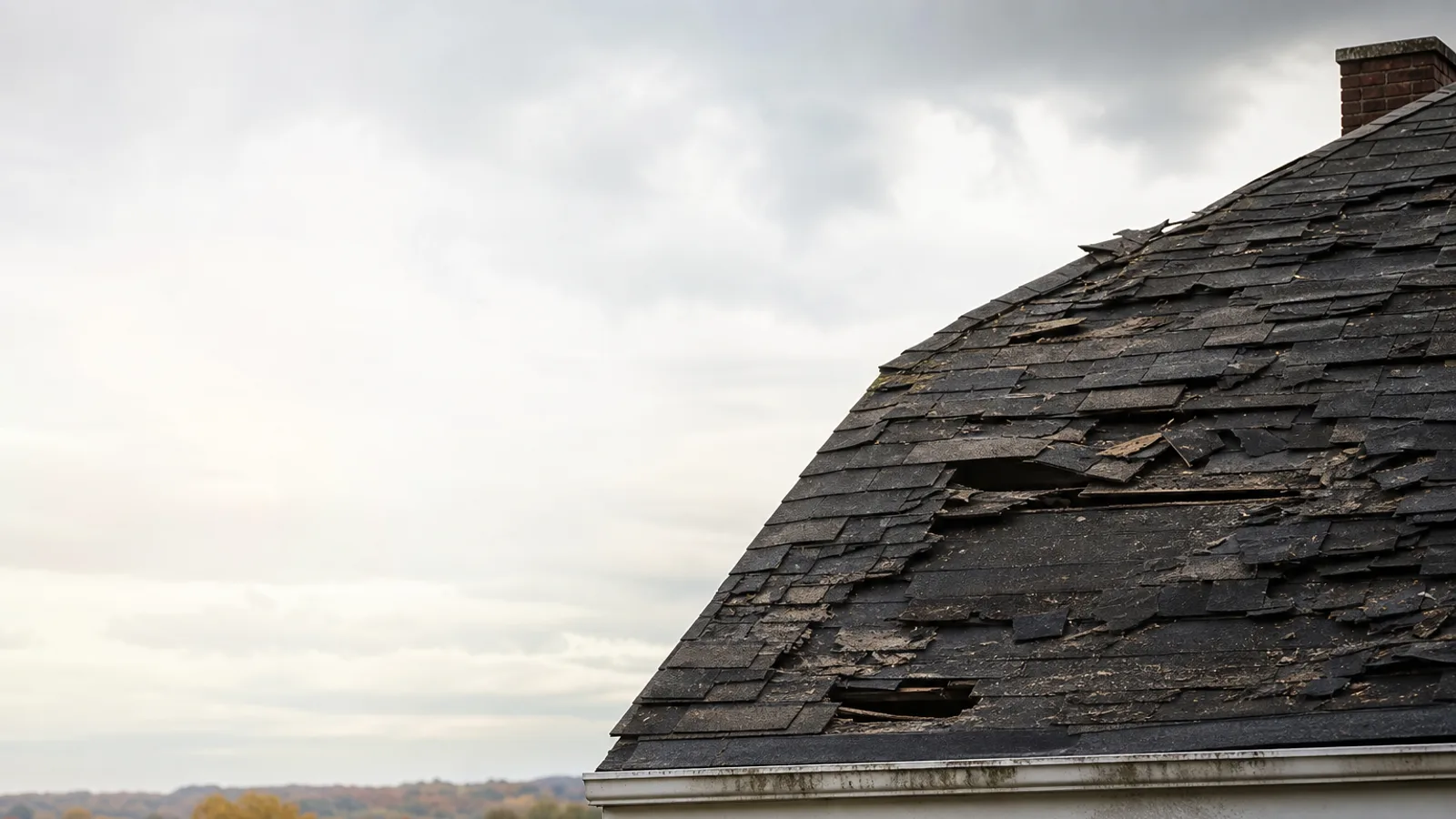
When a contractor says your roof is past its lifespan, they are not just talking about a birthday on the calendar. They are looking at how the shingles and the system as a whole are holding up. In Pennsylvania, asphalt shingles typically function for about 20 to 30 years depending on the product and how much weather they see. By the time you have curling edges, widespread granule loss, brittle tabs and recurring leaks, you are in end-of-life territory even if the roof is technically younger than the brochure said it would be.
In practice, a roof that is failing in several places usually has a combination of age, UV damage and sometimes poor ventilation behind it. That kind of roof is doing more than letting in water here and there. It is also hiding problems in the wooden deck, nails that have backed out, and flashing that is not doing its job anymore. Once you reach this stage, simple spot repair is rarely cost effective, and the real discussion becomes whether you put new shingles on top of what you have, or tear everything off and start clean.
It helps to separate cosmetic issues from system issues. A few blown-off shingles on an otherwise young roof can be patched. A roof that has soft spots when you walk it, sag in the plane of the roof, or dozens of cracked shingles across slopes is telling you the whole system has reached the end. If you are seeing water stains in more than one room or leaks at different roof planes, that is another sign you are beyond quick fixes and need to compare overlay against a full tear-off replacement.
- Widespread shingle curling and cracking
- Heavy granule loss and exposed asphalt
- Multiple active leaks in different areas
- Soft, spongy spots that suggest deck issues
How do full tear-off and overlay compare on cost and lifespan?
Overlay has one big selling point: immediate price. Because you are not paying to remove the existing shingles or dispose of them, you usually save a chunk of money on labor and dump fees. Industry guides note that skipping the tear-off step often trims roughly one to several thousand dollars off the bill on a typical asphalt shingle roof. For many families, that short-term savings is the main reason they look at an overlay when their roof is tired but not completely falling apart.
That same guidance is clear about the tradeoff. When new shingles are nailed over old ones, they do not lay as flat, they hold more heat, and they trap any existing deck issues. As a result, comparative guides report that an overlay roof often runs 10 years or more shorter in useful life than a clean tear-off with new architectural shingles. Where a properly installed architectural shingle roof on sound decking might give around 25 to 30 years of service, an overlay can fall into a 15 to 25 year window under similar exposure. The exact number depends on the product, ventilation and workmanship, but the pattern is consistent.
Cost ranges in our region back up why you should look at value per year, not just the upfront number. In Maryland, for example, a full asphalt shingle replacement that includes tear-off, materials and install averages around 9,900 dollars, with many homes falling between about 6,050 and 16,500 dollars depending on size and complexity. Pennsylvania sources put many full replacements for typical homes in roughly the 10,000 to 25,000 dollar band. An overlay job can come in cheaper than a full tear-off on the same house, but when you split that cost over the number of years you actually get from the roof, the full replacement often works out better per year, especially when it keeps your warranties and code compliance intact.
- Overlay skips tear-off and dump fees, lowering upfront cost
- Full tear-off usually delivers a longer shingle lifespan
- Overlay can reduce or void some manufacturer warranties
- Cost per year of service often favors a full tear-off
What do PA, NJ, and MD codes allow for roof overlays and layers?
Before you can even consider an overlay, you have to clear the code hurdle. In New Jersey, the state Uniform Construction Code limits homes to two layers of asphalt shingles on a roof. If your house already has two layers, you are legally required to do a full tear-off down to the deck before you can add new shingles. Even if you only have one layer, overlays are allowed only when the existing roof is asphalt or similar rolled material, not wood shakes, slate, metal or tile. The existing surface also has to be in decent shape without major curling, blisters or massive granule loss.
Maryland and Pennsylvania towns often adopt similar limits, especially around multifamily work and safety. Maryland rehabilitation standards for sloped roofs specify that replacement work must meet the shingle manufacturer instructions and building code, and they expect a minimum service life goal for standard fiberglass shingles. If an overlay setup keeps you from meeting those manufacturer directions or expected performance, it may not meet program standards. Many local inspectors also look closely at sagging, rotten decking and number of existing layers when deciding if an overlay is appropriate.
Across all three states, the deck itself is a gatekeeper. If there is evidence of structural problems such as sag between rafters, significant rot or areas where fasteners no longer hold, you cannot ethically or legally just bury those issues under another layer of shingles. A responsible contractor will call for a tear-off in those cases so the wood deck can be repaired or replaced and the new system can be nailed to solid material. Code officials are typically on the same page, especially when there are leaks into living spaces or obvious structural defects visible from the street.
- New Jersey typically allows a maximum of two asphalt shingle layers
- Overlay is not permitted over materials like slate, wood shakes or metal
- Visible deck sag or rot usually triggers a required tear-off
- Manufacturer instructions and codes can rule out overlays even if layers are under the limit
When is a full tear-off replacement the smarter choice for a failing roof?
When your roof is failing in several places, the odds quickly tilt toward a full tear-off being the smarter decision. Multiple active leaks, sheathing that flexes when walked, or shingles disintegrating across large sections usually indicate hidden damage under the surface. With a tear-off, your roofer can see exactly what is going on with the deck, underlayment and flashings around chimneys, skylights and walls. That lets them replace rotten plywood, fix poor flashing details and rework ventilation so the new shingles have a fair shot at their rated life.
There is also the warranty side of things. Many shingle manufacturers require a roof to be installed over properly prepared decking and limit how many layers can be under the new product if you want their stronger warranty coverage. Industry comparisons point out that some warranties are reduced or voided when you install over an existing roof, because the manufacturer cannot control what is underneath. For a homeowner in PA, NJ or MD hoping to stay in the house a long time, having that longer coverage and a roof built to spec can easily be worth the extra up-front cost of removing the old materials.
Resale and inspection issues matter, too. Home inspectors in our region are used to seeing older overlays that hide soft spots until someone goes up there. If you overlay a tired roof today and go to sell in a few years, a sharp buyer or inspector may flag the second layer, ask for concessions, or even insist on a full tear-off as part of the deal. By contrast, if you invest in a full roof replacement now on a roof that is already leaking in several places, you get a clean paper trail, better inspection notes and one less bargaining chip for the next negotiation.
When can an overlay make sense and what should you watch out for?
Overlay is not automatically wrong. It can make sense in narrow situations when the existing roof still has a reasonably flat surface, the deck is sound, and you are working with only one existing layer. If your budget is tight and you urgently need to stop leaks before a sale or a short remaining stay in the home, overlay can be a bridge that keeps water out without the full cost of a tear-off. The climate in PA, NJ and MD is not the easiest on shingles, but a carefully done overlay with proper underlayment and flashing work can still buy you useful time.
You do need to go into an overlay with eyes open. Because the new shingles follow the bumps and waves of the old roof, the finished look is usually not as crisp. The extra weight of a second layer also loads your framing more, which is not ideal on older homes that may already have marginal rafters. Heat buildup is another concern. Extra layers hold heat in the shingle field, which can contribute to faster aging compared with a single layer on a ventilated deck. Over the long term, this is part of why industry guides report a shorter average service life for overlays.
If you decide an overlay is on the table, insist on a thorough inspection anyway. Your contractor should check attic spaces for staining and mold, probe the deck from above for soft spots, and verify local code compliance on layer counts. You also want clarity on warranties. Some manufacturers provide different coverage for shingles installed as a second layer, and some do not allow it for specific products. Get those details in writing so you know what you are actually buying and how long you can reasonably expect it to perform.
- undefined
- undefined
- undefined
- undefined
- undefined
- undefined
- undefined
- undefined
Frequently asked questions
- Is it better to tear off old shingles or put a new layer over them?
- For a roof that is past its lifespan or leaking in several places, a full tear-off is usually the better long-term choice. Guides comparing the two approaches show that overlays tend to have a shorter service life and more warranty limits, while tear-offs allow repairs to the deck and proper installation. Overlay mainly makes sense when the existing roof is in relatively flat shape, the deck is sound, and you need short-term savings.
- How many layers of shingles are allowed on a roof in New Jersey?
- New Jersey’s construction rules generally limit homes to a maximum of two asphalt shingle layers. If you already have two layers, codes require a full tear-off down to the deck before a new roof goes on. Even with only one layer, the existing roof has to meet certain conditions for an overlay to be allowed, including being an approved material and not being badly deteriorated.
- Does an overlay roof last as long as a full tear-off replacement?
- No, overlay roofs usually do not last as long as roofs installed over bare decking. Industry comparisons report that a full tear-off with new architectural shingles can often reach about 25 to 30 years when properly installed and ventilated. Overlays tend to age faster and often fall into a shorter 15 to 25 year range because of heat buildup and any hidden deck problems that were not corrected.
- How much does a full roof replacement cost in Maryland compared to an overlay?
- Recent Maryland cost guides put a full asphalt shingle replacement, including tear-off and installation, around an average of 9,900 dollars, with many projects running between about 6,050 and 16,500 dollars depending on size and complexity. An overlay on the same house would usually cost less because you skip the removal and disposal of old shingles. However, the overlay’s shorter expected life and potential warranty limits can make its cost per year higher than a tear-off in the long run.
- Can I do a roof overlay if my current roof is leaking in several spots?
- You might technically be able to overlay a leaking roof, but it is often not wise if there are multiple leak points. Several leaks suggest underlying problems such as damaged decking or failing flashings that will not be fixed just by adding another layer of shingles. In those situations a full tear-off gives your roofer access to find and repair the sources of the leaks before installing the new roof system.
- Will an overlay affect my roof warranty or home resale value?
- An overlay can affect both warranty and resale. Many shingle manufacturers have stricter rules or reduced coverage when their products are installed over an existing roof instead of directly on the deck, and that can limit your protection if there is a problem. On the resale side, buyers and inspectors often view second-layer roofs as a temporary measure and may ask for a price reduction or a full tear-off replacement as part of the negotiation.
Talk to All Pro Home Improvement and Roofing about roof replacement →