A real roof replacement is more than new shingles. Use this checklist to see what each contractor is including, what they are skipping, and how that affects cost, warranty, and how long your roof will actually last.
Why does the exact roof replacement scope matter so much?
When you ask three contractors for a roof replacement price, the numbers can be thousands of dollars apart. On paper, every estimate might promise a "new roof", yet what is actually included can be very different. Some scopes stop at new shingles and a basic underlayment, while others detail everything from tear off and deck repairs to drip edge, ventilation adjustments, and final inspections. If you do not see those details in writing, you are gambling that the installer will quietly do things the right way at their own cost.
Industry guides aimed at both commercial and residential work all stress the same point: the scope of work is where leaks, warranty problems, and cost disputes are either prevented or baked in. Detailed scopes describe how many layers are being torn off, how deck damage is handled, where ice and water barrier goes, what happens at penetrations and edges, and how cleanup and inspections are handled. A vague scope leaves you exposed to change orders and shortcuts. In Pennsylvania, New Jersey, and Maryland, where weather swings hard and codes follow the 2024 International Residential Code, the right details in your scope protect you legally, financially, and physically.
- Estimates can look similar but include very different work items.
- Missing details about tear off and deck repair often lead to change orders.
- Code and manufacturer rules only protect you if they are followed in the field.
- A written scope is your only real leverage if something goes wrong.
What should a full tear off and deck prep include in your quote?
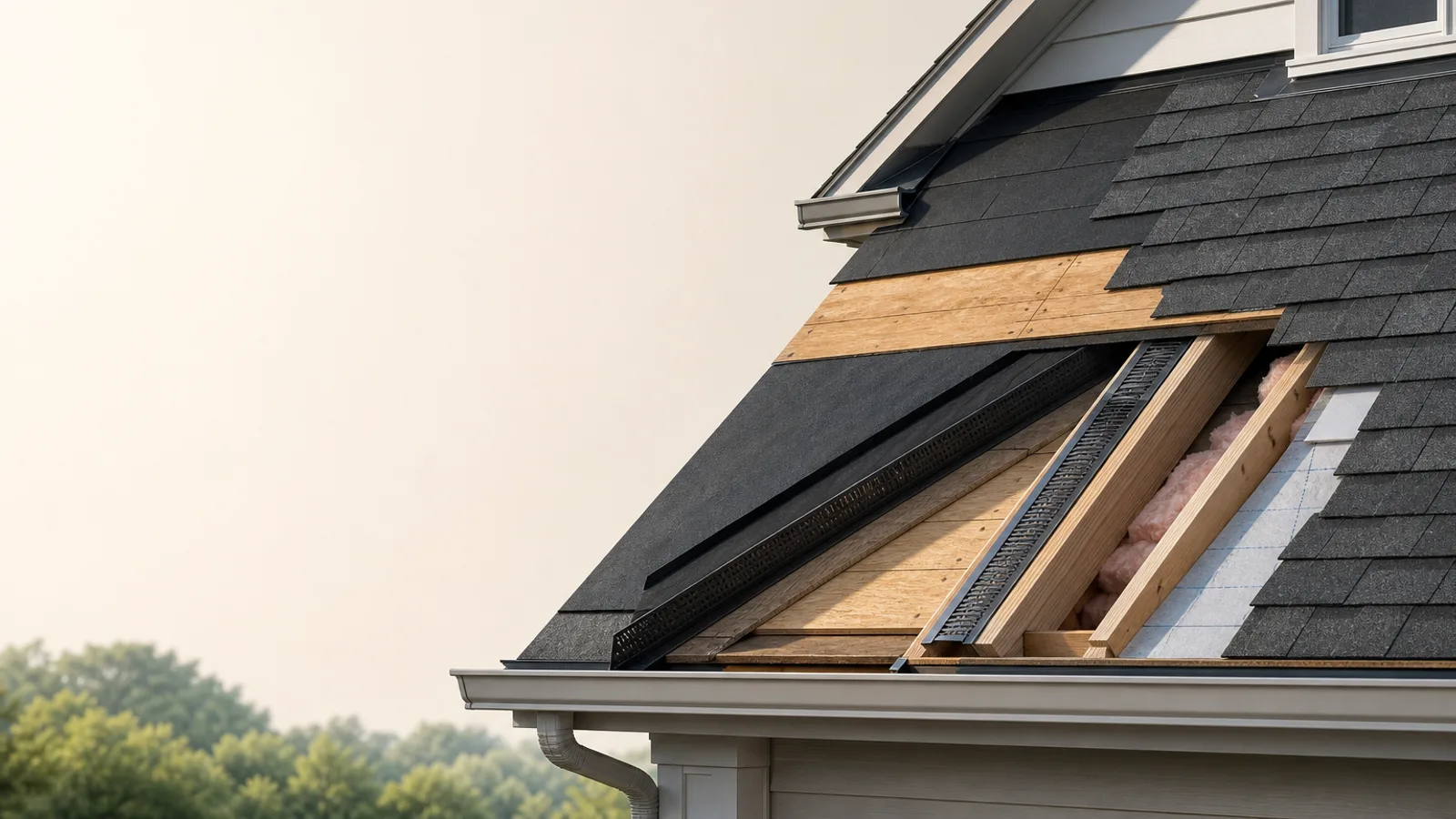
A true roof replacement starts with removing old material down to solid decking. Residential best-practice checklists emphasize full tear off to bare wood so the installer can see and address rot, gaps, and loose fasteners before installing anything new. Codes limit how many layers can remain on a roof, and manufacturer homeowner guides recommend exposing the deck so the new system is not installed over hidden problems. Your proposal should say whether they are stripping all layers, how they dispose of old materials, and what happens if they find damaged decking.
Look for clear language about deck inspection and repairs. Many homeowner-focused scopes list line items for replacing sheets of plywood or plank boards at a set price per piece once exposed. The proposal should also address fastening standards so the deck is solid enough for modern shingle and underlayment systems. Without this, contractors may either cover questionable decking to avoid extra labor, or they might surprise you with a big change order once the roof is open. Written deck repair allowances and unit prices give you a fair, predictable way to deal with what they find under the old roof.
- Full removal of existing shingles and underlayments to expose the deck.
- Identification of how many layers are being torn off or left in place.
- Specifics on deck inspection, replacement criteria, and per-piece pricing.
- Description of debris handling, dumpster placement, and haul-off.
Which underlayments, ice barriers, and drip edge details should be written in?
Underlayment and ice barrier are the parts you never see again after installation, but they are crucial to how your roof performs. Residential roof replacement checklists call for an ice and water shield along eaves and in valleys in climates where freezing occurs, along with a synthetic or felt underlayment over the rest of the deck. The 2024 residential code describes acceptable materials and how they must be installed, and manufacturer homeowner guides echo those requirements, because warranty coverage depends on these hidden layers being handled correctly.
Your proposal should specify underlayment type, brand or standard, and exactly where ice barrier will be installed. It should also list drip edge, which is the metal that protects roof edges and helps guide water into the gutters. Code chapters on roof assemblies outline how drip edge interacts with underlayment at eaves and rakes, including which component laps over the other. Proposals that simply say "felt" or "underlayment" without locations, fastener spacing, or ice barrier coverage leave room for shortcuts that can show up later as ice dam leaks or edge rot. Make sure those locations are spelled out in plain language in the scope.
- Type and standard of the main underlayment over the roof deck.
- Locations where ice and water shield will be installed, such as eaves and valleys.
- Inclusion of new drip edge metal at all eaves and rakes.
- Basic installation relationships, such as which layers lap over others.
How should flashing, penetrations, and ventilation appear in a proper scope?
Flashing and penetrations are where most leaks start, so what the quote says here matters more than the shingle color. Industry homeowner guides urge owners to insist on clear descriptions of how chimneys, skylights, walls, and pipe penetrations will be handled. The scope should say whether flashings are being replaced or re-used, what metals are used, and how they are integrated with underlayment and shingles. Commercial scope templates for flat roofs go into great detail about gauge, fastening, and terminations at penetrations, and the same principle applies on homes in PA, NJ, and MD: if it is not written, it is negotiable later.
Ventilation is another often-missed line item that affects shingle life and attic moisture. Code chapters for roof assemblies define minimum ventilation ratios and approved methods such as continuous ridge vents and soffit vents. Manufacturer homeowner guides explain that ventilation is part of a system approach to prevent heat buildup and condensation. Your replacement quote should state whether existing vents are being re-used or upgraded, what kind of ridge or roof vents will be installed, and whether intake vents in the soffits are adequate. If a proposal ignores ventilation entirely, ask how they are meeting code and manufacturer requirements.
- Removal and replacement of step and counter flashing at walls and chimneys.
- New collars or boots at plumbing vents and other pipe penetrations.
- Clear plan for skylight flashing or replacement if they are aging.
- Description of ridge, box, or other roof vents and how intake air is provided.
What quality control, warranty, and cleanup items separate solid bids from risky ones?
Beyond the physical materials, a complete roof replacement scope explains how the quality of the installation will be verified. Commercial scope templates often require pre-installation meetings, in-progress inspections, and final walk-throughs, sometimes with a manufacturer representative present. On the residential side, homeowner guides recommend that estimates describe who inspects the finished roof, how punch list items are handled, and what documentation you receive at the end. You want to see language about final inspection, photos if appropriate, and warranty registration rather than just a one-line promise of a "warranty".
Your proposal should also state what type of warranty you are getting and who backs it. There is a difference between a manufacturer material warranty and any workmanship coverage a contractor offers. Check whether the scope references complying with relevant building codes and manufacturer installation instructions, because both are often conditions of warranty validity. Finally, look carefully at site protection and cleanup details. Residential checklists for line items mention tarping landscaping, protecting driveways from dumpsters, daily cleanup, magnetic nail sweeps, and disposal. If a bid is silent on cleanup, assume you will be the one finding nails in the yard later.
- Description of any in-progress or final inspections on the job.
- Clear explanation of manufacturer and workmanship warranty coverage.
- Reference to following building code and manufacturer instructions.
- Details on property protection, daily cleanup, and nail magnet sweeping.
How can you use a checklist to compare roof replacement providers fairly?
Scope checklists created for building owners are built around one big truth: proposals can look similar while including very different work. They suggest organizing the scope into sections such as project overview and site conditions, tear off, deck prep, underlayments, primary roofing system, edges, drainage, quality control, and warranty, then checking each proposal against those sections. Homeowner roof replacement checklists do the same in simpler language, listing items like tear off, deck repair, ice and water shield, synthetic underlayment, drip edge, flashing, ventilation, shingle system, and cleanup. When you compare this way, the cheapest bid often turns out to be missing several of those core pieces.
In Pennsylvania, New Jersey, and Maryland, a practical way to proceed is to print a checklist and line up your estimates side by side. For each contractor, mark whether they have addressed each item in writing and what they are including. Where something is missing, ask them to confirm in writing whether it is included, excluded, or an extra. If you decide to move forward with a local contractor such as for a full roof replacement, you can use that clarified scope as the basis for your contract so you are comparing not just prices but the actual work and protection you are buying.
- Create a simple list of scope sections and work through each proposal.
- Highlight items each contractor includes, excludes, or leaves vague.
- Ask for written clarification instead of relying on verbal promises.
- Base your decision on both scope completeness and price, not price alone.
- undefined
- undefined
- undefined
- undefined
- undefined
- undefined
- undefined
- undefined
Frequently asked questions
- What should be included in a standard roof replacement quote?
- A standard roof replacement quote should include full tear off, deck inspection and repairs, underlayments and ice barrier, drip edge and flashing, the main roofing system, ventilation components, and cleanup. Industry guides aimed at homeowners and building owners all stress written details for each of these steps, not just a brand and shingle style. If a proposal leaves entire categories out, ask the contractor to revise it before you sign.
- Do I really need a full tear off, or can I roof over existing shingles?
- Whether you can roof over depends on how many layers are already on the house and the condition of the existing roof, and this is governed by building code limits. Residential code chapters on roof assemblies set strict rules on when a recover is allowed and when a full tear off is required. Even where recover is legal, many homeowner guides recommend full tear off so damaged decking and hidden leaks can be addressed before the new system goes on.
- Why are underlayment and ice and water shield so important under the shingles?
- Underlayments and ice barriers form a secondary water shed and backup protection if wind-driven rain gets under the shingles or ice dams back water up. The 2024 residential code and manufacturer guidelines specify where these materials must be installed and how they must be lapped and fastened. Skimping on them might not show immediately, but it increases the risk of leaks at eaves, valleys, and low-slope areas over the life of the roof.
- Should all my roof flashing be replaced during a roof replacement?
- Most homeowner and industry guides recommend replacing flashings at walls, chimneys, and penetrations during a full replacement, not relying on re-using old metal. New flashing lets the installer integrate it properly with modern underlayments and shingles and helps avoid creating weak points around critical details. If a contractor plans to leave major flashing in place, ask why and how they will maintain watertight integrity around it.
- How does attic ventilation fit into a roof replacement scope of work?
- Attic ventilation affects heat buildup, moisture, and shingle life, and it is treated as part of the roof assembly in the residential code. A proper scope of work should identify existing vents, say whether they will be upgraded, and explain how intake and exhaust openings will meet or exceed code requirements. Ignoring ventilation during a replacement can leave you with a new roof that still has condensation or heat problems in the attic.
- What kind of warranty should I expect with a new asphalt shingle roof?
- With a modern asphalt shingle roof, you should expect at least a manufacturer material warranty plus a separate workmanship warranty from the installer, each described in your paperwork. Homeowner guides from trade associations explain that some systems offer enhanced warranties if the entire roof assembly is installed to the manufacturer’s specifications by a qualified contractor. Whatever is offered, make sure the terms, duration, and any required maintenance are written into your contract.
Talk to All Pro Home Improvement and Roofing about roof replacement →