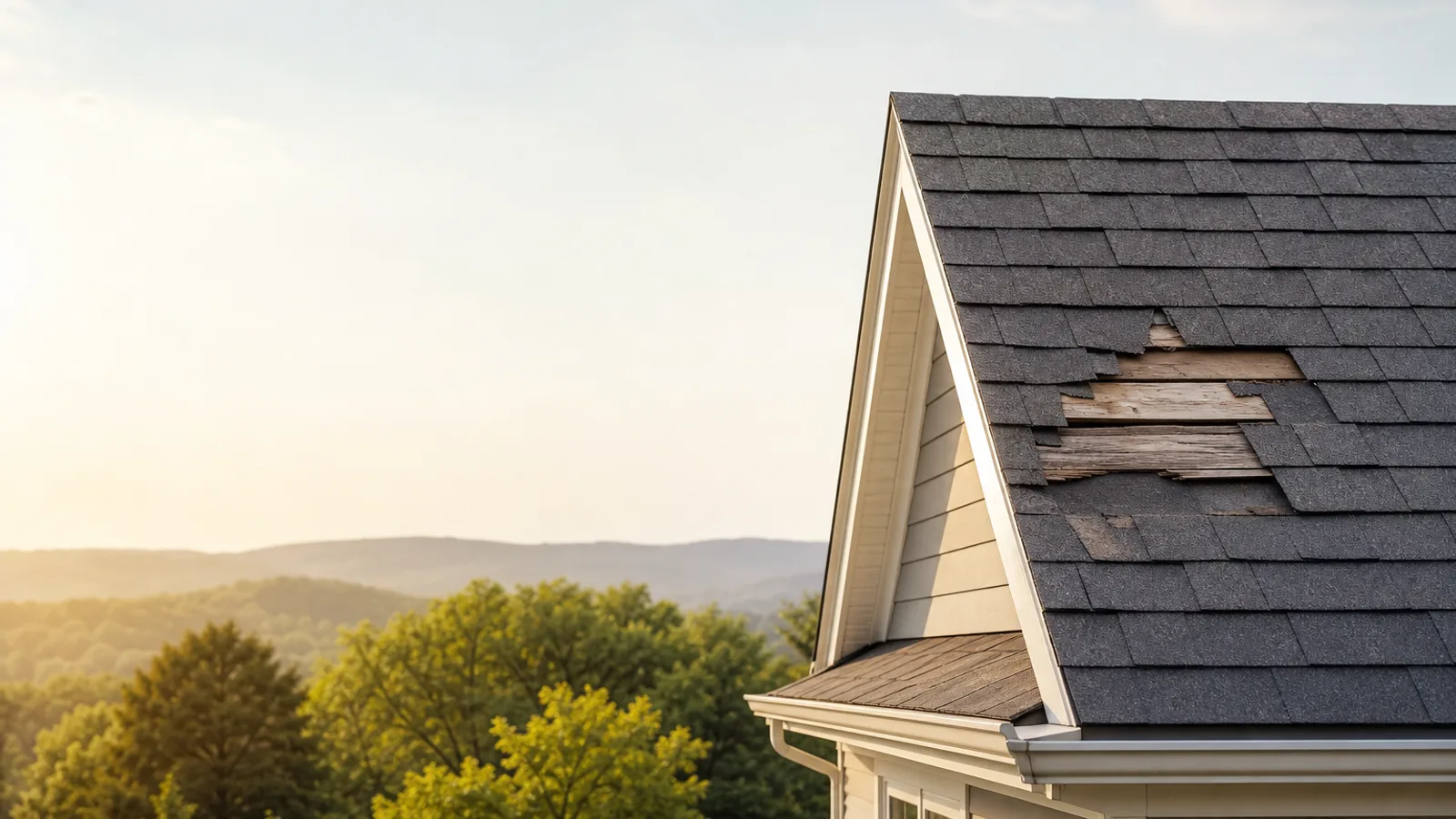
Roof repair demand is climbing across the Mid-Atlantic at the same time Maryland tightens rules on post-disaster work. Here is how those shifts may affect your costs, your timeline, and the way you sign a repair contract in PA, NJ, and MD.
What changed this month with roof repair demand in our region?
Right now, roof repair is not a slow season job. National reporting on search behavior shows that interest in fixing and replacing roofs is meaningfully higher than at this time last year, even if week-to-week numbers wiggle up and down. That means more people are actively looking for help with leaks, aging shingles, and storm damage instead of waiting. When more homeowners and building owners are searching at the same time, it tends to translate into busier phones and fuller schedules for any roofing outfit that actually answers calls.
Pennsylvania stands out. A recent state-level analysis of roofing search terms found that roofing-related keywords in PA jumped by just over 100 percent when the last 12 months were compared to the prior year. Fourteen out of sixteen roofing phrases the researchers tracked all moved upward. That is a big shift in interest over a relatively short window. If you live in Pennsylvania, that spike is a pretty good clue that you will not be the only one trying to get a roofer out before winter or before the next storm season. New Jersey and Maryland were not singled out with the same kind of chart, but they ride the same weather patterns and aging housing stock, so they tend to follow similar demand curves.
For you as a homeowner, what matters is not the exact percentage but the direction of the trend. You are heading into a season where roof repair is more popular, not less. When that happens, contractors who might have been able to visit in a day or two may move to a week or more, and emergency spots will be reserved for active leaks and serious damage. It does not mean you cannot get work done. It just means the old habit of waiting until water shows up on the ceiling is more likely to leave you in a line.
- Expect more homeowners competing for the same repair calendar slots.
- Assume that "free" days in a roofer’s schedule are fewer than last year.
- Plan repairs before visible leaks or interior damage appear.
- Allow extra time between estimate, scheduling, and actual repair day.
How does Maryland’s new HB1351 law change roof repair after storms?
If you are in Maryland, there is a second trend on top of the rising demand: new rules about how disaster-related home improvement work is handled. A new law, known as HB1351, broadened what the state considers home improvement to include certain disaster mitigation services. That category can cover the kind of emergency work people look for after hail, wind, or fallen trees damage their roofs. The law took effect at the start of October, so it applies to contracts you sign now, not just some future time.
HB1351 also gives homeowners more leverage with contracts tied to those mitigation services. In specific situations, you can back out of a disaster mitigation contract after signing, and local governments have the power to put guardrails around in-person soliciting, like door-to-door pitches, right after a damaging event. The intention is to protect homeowners from being pushed into quick agreements at a vulnerable moment. For roof repair companies, the flip side is more licensing and regulatory attention if they are operating in Maryland while doing that kind of emergency work.
As a homeowner, this matters in a practical way. When you need urgent roof repair after a storm, you will see a mix of established contractors and out-of-town crews. The law does not guarantee quality, but it makes licensing and contract compliance more important. You should expect to be offered written terms that fit Maryland’s requirements and give you clear information about your right to cancel in certain disaster-related scenarios. If a contractor pushes you to skip paperwork or refuses to show a license where one is required, that is a real red flag in the new environment.
- Verify that any Maryland roof repair contractor holds the correct license.
- Ask whether your job is considered disaster mitigation under HB1351.
- Read the contract’s cancellation and rescission terms before you sign.
- Be wary of high-pressure, door-to-door offers right after storm damage.
Are public projects in PA and South Jersey going to slow down my roof repair?
Residential roofing is not the only demand on crews in our area. A market review of public-sector work in southeastern Pennsylvania and South Jersey counted more than one hundred active roofing opportunities among schools, municipalities, and similar entities. Dozens of those projects were listed as funded or under design but not yet put out to public bid. That means there is a pipeline of upcoming work on top of the jobs that are already being quoted, awarded, or built.
Many of those projects involve flat or low-slope roofs on larger buildings, so they do not directly compete with a basic shingle repair on a single-family home. The materials, equipment, and crew sizes can be different. Still, the same labor pool and many of the same suppliers feed both sides of the market. When big institutional projects ramp up, they can tighten the availability of experienced installers and crew leaders who also work on residential jobs. That is especially true in counties where there are only so many skilled foremen and service techs to go around.
For your home, the impact looks like small shifts in timing rather than an absolute shortage. You might find that a contractor asks to bundle your repair into certain days when their crew is not scheduled on a school or township building. You could also see longer lead times on particular products if a public project has already reserved large quantities. The important thing is to talk about scheduling honestly during your estimate. If a roofer is overcommitted to public jobs and cannot give you a realistic repair date, you need to know that before you agree to anything.
- Ask how your contractor balances public and residential roofing work.
- Get a specific, written timeframe for your repair, not a vague season.
- Confirm material availability if your roof uses less common products.
- Be flexible on repair days if you want to avoid paying emergency rates.
Do new roof repair products and tech from industry expos matter to homeowners?
On the technology front, a major industry expo held recently highlighted several tools, materials, and accessories that focus on repair and restoration, not just full replacement. Manufacturers promoted thinner, higher-performance insulation boards intended to speed up installation on commercial roofs and reduce the number of truckloads needed. While you may not be re-insulating a big flat roof on your home, those kinds of products show where the market is going: lighter, more efficient materials that aim to cut down labor time per job.
There was also attention on restoration systems that can extend the life of certain commercial roofs by coating them rather than tearing them off. For a homeowner, that mostly matters if you own a small commercial building or a multifamily property with a low-slope system. More directly relevant to a single-family home is the rise of purpose-built repair parts aimed at known failure points, like the area where plumbing vent pipes come through your shingles. A product that can repair those weak spots without stripping surrounding shingles can reduce how invasive a fix has to be.
New tech tools were part of the story too, including artificial intelligence aids and virtual sales platforms for contractors. Those systems promise to streamline estimates, scheduling, and customer communication. As a homeowner, the benefit is not the buzzword. What matters is whether your roofer shows up with accurate measurements, clear scope descriptions, and fewer surprises. The industry is clearly reacting to the need for faster, more efficient repairs, which can work in your favor when you need a small job handled before it turns into a big one.
- Expect more repair parts designed for specific leak-prone roof details.
- Look for contractors who use tech to document your roof with photos and notes.
- Ask whether restoration options exist for flat or low-slope roofs you own.
- Understand that new products aim to save labor time, not just materials.
So what should a homeowner in PA, NJ, or MD actually do about these trends?
When you put all these pieces together, the theme is that roof repair is getting busier, more regulated in some places, and slightly more technical. That is not a reason to panic or to assume every job will be unaffordable. It is a reminder that reacting only after a ceiling stain shows up is the most expensive and stressful way to deal with your roof. With higher demand in Pennsylvania, active public work in parts of PA and South Jersey, and new rules in Maryland, a little planning goes further this year than it might have a few years ago.
A simple first step is to get eyes on your roof before the weather turns worse. That can be as basic as a walk-around from the ground looking for missing shingles, cracked sealant around vents, or clogged gutters. If anything looks off, you can schedule a professional visit and leave enough time to compare scopes and approaches rather than grabbing the first price you hear. When you are ready to talk to a contractor, reading through a clear scope of work tied to roof repair will help you match what is proposed with what your roof actually needs instead of being upsold into a replacement you are not ready for.
In Maryland, the contract details matter more than ever because of the revised home improvement rules that touch disaster mitigation services. Get a written agreement, confirm licensing status, and make sure you understand whether your job falls into that category with extra cancellation rights. In Pennsylvania and New Jersey, you should still expect proper contracts and proof of insurance, even if the specific Maryland statute does not apply. The trend lines suggest that roof repair is not getting simpler, but with clear information and a bit of lead time, you can still control your costs and outcomes rather than letting the market or the weather control them for you.
- undefined
- undefined
- undefined
- undefined
- undefined
- undefined
- undefined
- undefined
- undefined
- undefined
Frequently asked questions
- Why is it harder to schedule a roof repair in Pennsylvania this year?
- A recent analysis of roofing-related search terms found that Pennsylvania saw more than a twofold increase in searches over a recent 12-month span compared with the previous year. More people looking for roofers usually means fuller calendars, especially heading into bad weather. If you are in PA, expect longer lead times and try to book repairs before you see interior leaks.
- What does Maryland HB1351 mean for my roof repair after a storm?
- Maryland’s HB1351 expanded the definition of home improvement to cover certain types of disaster mitigation, which can include emergency roof work after severe weather. It gives you more power to rescind some contracts and allows local limits on aggressive in-person solicitation after disasters. This makes it more important to work with licensed contractors and to read your contract carefully before signing.
- Will public roofing projects delay my residential roof repair in South Jersey or southeastern PA?
- A recent market study identified more than a hundred active public roofing opportunities in southeastern Pennsylvania and South Jersey, with many more in the planning stage. Those jobs share labor and suppliers with residential work, so they can tighten contractor availability. The effect is usually longer scheduling windows rather than complete unavailability, so ask about timing and confirm dates in writing.
- Are new roofing products from trade shows going to lower my roof repair cost?
- New materials and accessories promoted at industry expos aim to make installations lighter, faster, or less invasive, particularly on commercial roofs and known leak points. They may reduce labor hours on certain tasks, which can help control costs, but they do not erase the price of skilled labor or quality materials. The main benefit is often better, longer-lasting repairs instead of dramatically cheaper ones.
- Should I wait to see if my small roof leak gets worse before calling a roofer?
- With roof repair demand climbing and scheduling getting tighter, waiting usually costs you more. A small leak can damage decking, insulation, and interior finishes long before you see major staining, and those repairs add up. Calling when you first suspect a problem gives you more scheduling options and keeps the fix smaller and more predictable.
- How can I tell if a roof repair contractor is legitimate in Maryland, New Jersey, or Pennsylvania?
- In all three states, start by asking for proof of licensing where required, current insurance, and a physical business address. In Maryland, the new rules around disaster mitigation work make that licensing more critical, especially after a storm. In every state, insist on a written contract that explains the scope, price structure, and any cancellation rights before you allow work to begin.
Talk to All Pro Home Improvement and Roofing about roof repair →