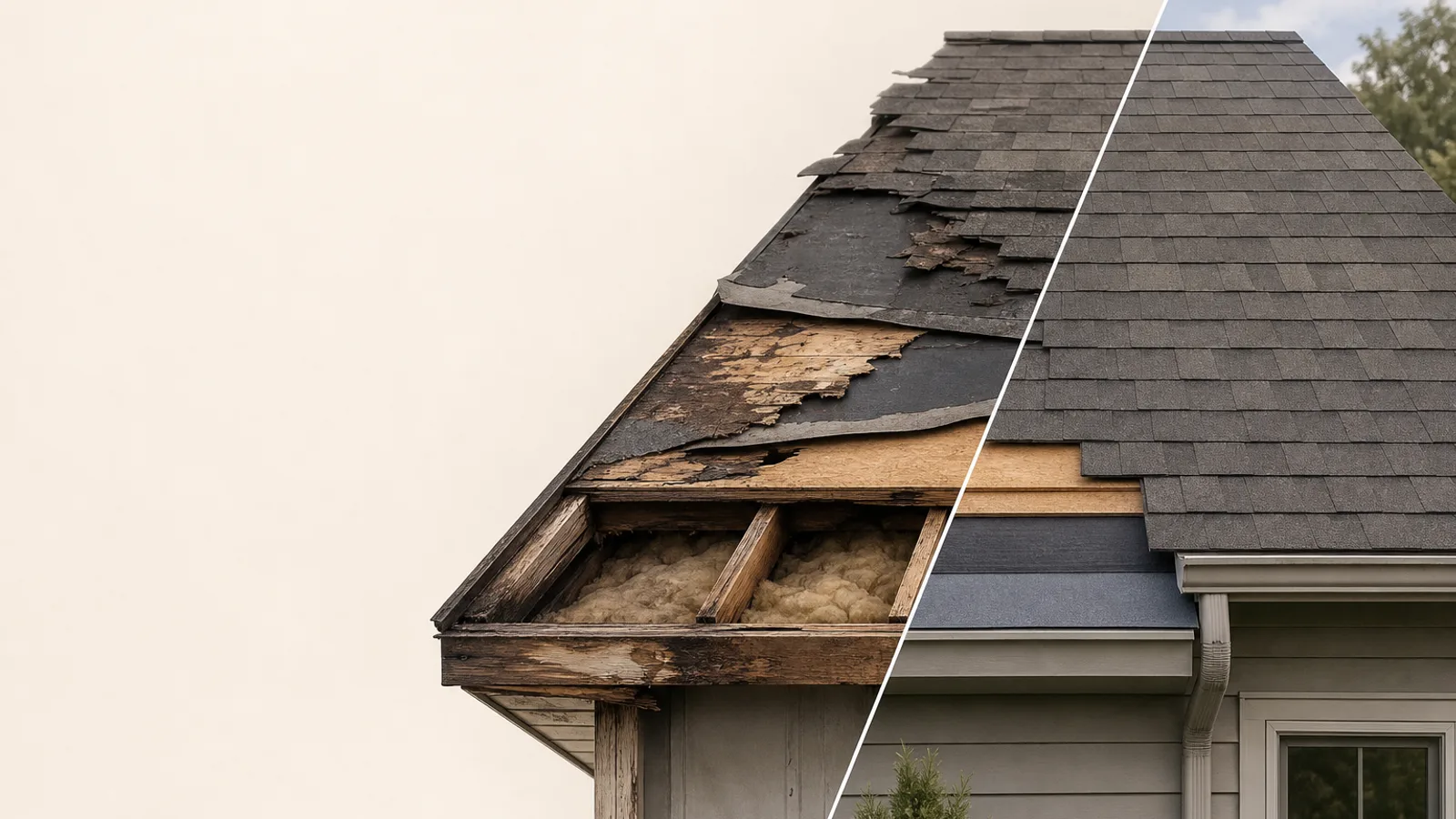
Premium roof repair is not just a pricier shingle. It is materials, installation standards, and details that decide how often you deal with leaks and repairs later.
What does “premium roof repair” actually mean for a homeowner?
When you hear premium roof repair, it is easy to assume it just means the contractor charges more. In practice, the word “premium” is about the scope of what is repaired, the grade of materials used, and how closely the work follows industry standards. Cheap repair work usually focuses on stopping the immediate drip with the least labor and least material cost. That can be as simple as sliding in a few new shingles or smearing sealant over a crack and moving on.
A premium repair treats your roof as a system. Instead of just replacing what is visibly broken, the roofer traces why it failed, looks at the surrounding shingles, underlayment, and flashings, and then fixes the weak areas that are about to follow. Trade guidance from national groups explains that proper asphalt shingle systems require sound decking, correctly installed underlayment, drip edge, and flashing, not just shingles on wood. When those pieces are missing or compromised, a cheap patch might hold for a season, but you will be back to dealing with stains and ceiling damage later. The premium approach costs more up front because there is more work and better materials involved, but the goal is to avoid the revolving door of small repairs.
- Cheap repair targets the symptom, not the cause of the leak.
- Premium repair evaluates the whole roof area around the problem.
- Cheap repair limits labor and materials to the bare minimum.
- Premium repair plans to prevent repeat issues in the same spot.
How do shingle material tiers affect the quality of a repair?
On an asphalt shingle roof, not all shingles are created equal, even though they must all meet basic industry specifications. Trade sources describe three common market tiers: basic strip shingles, mid tier architectural shingles, and higher end designer or luxury products. All must comply with standards that cover things like minimum asphalt content, reinforcing mat, and weathering performance. That baseline is meant to keep the worst of the junk off the market, but there is still a wide spread in weight, durability, and features between the lower and higher tiers.
Premium repairs usually match or upgrade your existing shingle tier rather than dropping down to a builder grade product. Higher tier shingles tend to be heavier per square, which helps with wind resistance and impact tolerance, and often come with more generous manufacturer warranty terms when installed correctly. Some systems include larger or reinforced nail zones that make it easier to place fasteners exactly where the manufacturer wants them. A budget minded contractor might use lighter, simpler shingles or mix tiers in one repair area to save a few dollars. That can affect appearance and system performance, especially in exposed locations like rakes, ridges, and eaves where wind likes to find weak spots.
Standards that cover fire classification also come into play. Shingles that carry a Class A fire rating meet specific lab-tested requirements for resistance to fire spread. Those tests set minimum criteria for how the shingle is built and how it performs under heat and flame exposure. A premium repair pays attention to matching or preserving that level of protection, rather than swapping in whatever stock is cheapest that day. The end result is not just looks, but how the roof stands up to sun, wind, and weather over time.
- Builder grade strip shingles are the thinnest and lightest tier.
- Architectural shingles add thickness and better wind performance.
- Designer or luxury shingles are heavier and more detailed visually.
- Class A fire rated shingles are built to higher fire resistance criteria.
Why underlayment, ice protection, and flashing are where cheap repairs cut corners
Most homeowners focus on what they can see, which is the shingle or slate on top. Premium roof repair spends just as much attention under the surface, on underlayment and flashing. Contractor comparison guides lay out a clear pattern: entry level work often uses basic felt paper, minimal or no self adhering membrane in leak prone areas, and thin or reused metal flashings. That keeps the material and labor line on a quote low, but it also means the first barrier under your shingles is working at its limits from day one.
Premium repair typically involves synthetic or enhanced underlayments that resist tearing and wrinkling, and self adhering ice and water protection installed in key areas such as valleys, eaves, and around penetrations. Those products are designed to seal around fasteners and provide a secondary waterproof layer if water backs up or blows under the shingle layer. Flashing details also change between cheap and premium work. Heavier gauge metals, properly integrated step flashing at walls, carefully formed drip edge, and correctly sized counterflashings help keep water from finding hidden paths into your sheathing and interior. Trade guidelines from national roofing groups emphasize the importance of evaluating existing flashings and replacing them if they are damaged, corroded, or incompatible with the new materials. A quick patch that reuses marginal flashing may stop the leak you see today, but it often leaves another opening for the next wind driven rain.
How workmanship standards and inspection separate a solid repair from a patch
Two roofs can use identical shingles and underlayment and still perform very differently if the installation is not up to standard. Industry groups that work with manufacturers have issued detailed quality control guidance for asphalt shingle roofs. They spell out how roof decks should be inspected, how smooth and dry they must be, and how underlayment and drip edge should be layered. They go on to detail fastener types, patterns, and placement, as well as requirements for neat alignment, correct exposure, and properly woven or cut valleys. Those documents exist because small workmanship errors, like nails driven at an angle or sealed flashing joints without proper laps, are a leading cause of early roof problems.
Premium roof repair follows those standards and the particular manufacturer instructions for the materials on your home. That often includes checking the nail pattern and count per shingle, making sure fasteners are driven flush but not cutting into the surface, and inspecting each course as it goes down. It also means documenting existing conditions, such as the condition of the deck or any soft spots uncovered during tear off, and addressing them instead of covering them back up. Cheap repair work typically skips most of that structure. Nails may be scattered by feel, underlayment laps may not match the recommended overlap, and flashings might be bent and forced into place rather than measured and cut. You may not see the difference from the ground, but the first heavy storm will. Following the written standards takes more time and training, so it costs more, but it also supports manufacturer warranties and longer service life.
What changes with premium repairs on slate and other high end materials?
In Pennsylvania, New Jersey, and Maryland, many older homes still carry slate roofs or other high end materials. Repairs on those roofs are where the gap between premium and cheap work can really show. Technical standards for roofing slate classify products into several grades based on how they handle water absorption, load, and weathering. The highest grade slates are tested to perform for a long service life, while lower grades may weather and soften sooner. A premium repair on a slate roof will match the existing grade or a compatible equivalent so that new slates age at the same rate as the roof around them.
Cheaper repairs might use whatever slate is most affordable, even if it is a lower grade or a different stone type. That can lead to new pieces curling, delaminating, or changing color at a different pace than the rest of the field. Premium work also pays attention to fastening and substrate, using appropriate nails and techniques designed for brittle materials, and following industry references that detail how to support and flash around chimneys, valleys, and dormers on slate systems. In contrast, a low cost patch might rely heavily on exposed sealants or metal pans tucked under cracked pieces rather than properly laced in replacement slate. Over time, that approach tends to look rough and can create water traps that shorten the life of nearby tiles.
How should you compare a cheap roof repair bid to a premium one?
When you have a leak in a Mid Atlantic winter, the temptation is to grab the lowest quote and get it over with. Instead of just looking at the bottom line, you should break the estimates down into what is actually included. Ask each contractor to specify the shingle or tile type by name and tier, the underlayment type, and what kind of ice and water protection is included. Get clarity on whether any damaged wood decking will be replaced and at what rate. Premium proposals are more likely to spell all this out and tie it to recognized standards and manufacturer guidelines.
The same goes for flashing and ventilation. Find out whether flashings at walls, chimneys, and penetrations will be inspected and replaced if they are worn or incorrectly installed. Ask which standards or installation manuals the crew plans to follow for your roof system, especially for asphalt shingles or slate. Look at the warranty as more than just a number of years. Make sure you understand what is covered, and what requires the work to be done to specific guidelines in order to stay valid. If you want to see what a full scope looks like, you can compare any quote you receive to the level of detail that goes into a thorough roof repair plan. Once you put bids side by side this way, you can see when a low price comes from real efficiency and when it is simply missing key protections that you may end up paying for later.
Frequently asked questions
- What is the main difference between a cheap roof repair and a premium one?
- The main difference is scope and attention to the entire roof system, not just the visible leak. Cheap repairs usually aim to stop water quickly with minimal material and labor, while premium work evaluates decking, underlayment, shingles, and flashings and repairs underlying causes. Premium repairs also tend to follow formal installation standards and manufacturer instructions more closely. That combination usually leads to fewer repeat problems in the same area.
- Do premium roof repairs always use better shingles than budget repairs?
- Premium repairs typically match or upgrade the existing shingle tier, whereas budget work may use lighter or more basic products. All asphalt shingles must meet baseline standards, but higher tier shingles generally have greater weight, more robust construction, and better design features. Those differences can help with wind resistance, appearance, and how long the repair area blends in with the rest of the roof. The quote should state which product tier is being used so you can compare.
- Why should I care about underlayment and flashing in a roof repair?
- Underlayment and flashing are the hidden parts that keep water from sneaking under your visible roof covering. Basic felt and thin or reused flashings can work for a while but are more likely to fail under ice, wind driven rain, or aging sealant. Premium repairs often include upgraded underlayment, targeted self adhering membranes, and properly sized and lapped flashings. That investment helps protect your decking and interior even when shingles are stressed by weather.
- How do industry standards affect the quality of a roof repair?
- Industry standards and manufacturer guidelines set clear expectations for things like deck condition, nail placement, underlayment overlaps, and flashing details. When a contractor follows those documents, the repair is more likely to perform as the product designer intended and to qualify for any associated warranties. Cheap repairs often ignore those details, which might save time but can lead to uplifted shingles, leaks at joints, or early deterioration. Asking which standards a contractor follows is a good way to gauge their approach.
- Is a premium repair worth it if I plan to replace my roof soon?
- If replacement is truly in the near future, you may be able to live with a more limited repair, but you still want it done safely and in line with basic standards. In some cases, using compatible materials and methods now can make the later replacement easier and support temporary warranties. If the future replacement is several years out, investing in a repair that uses solid underlayment and flashing details can help prevent damage to the structure and interior while you wait.
- What should I ask a roofer to see whether their repair quote is premium quality?
- Ask for specifics on materials by name and tier, including shingles, underlayment, ice and water protection, and flashings. Request an explanation of how they will inspect and address any damaged decking, as well as which written installation standards they follow for your roof type. Confirm what is covered under their workmanship and material warranties and how long those protections last. The clearer and more detailed their answers and written scope are, the more likely you are looking at a premium level repair.
Talk to All Pro Home Improvement and Roofing about roof repair →