
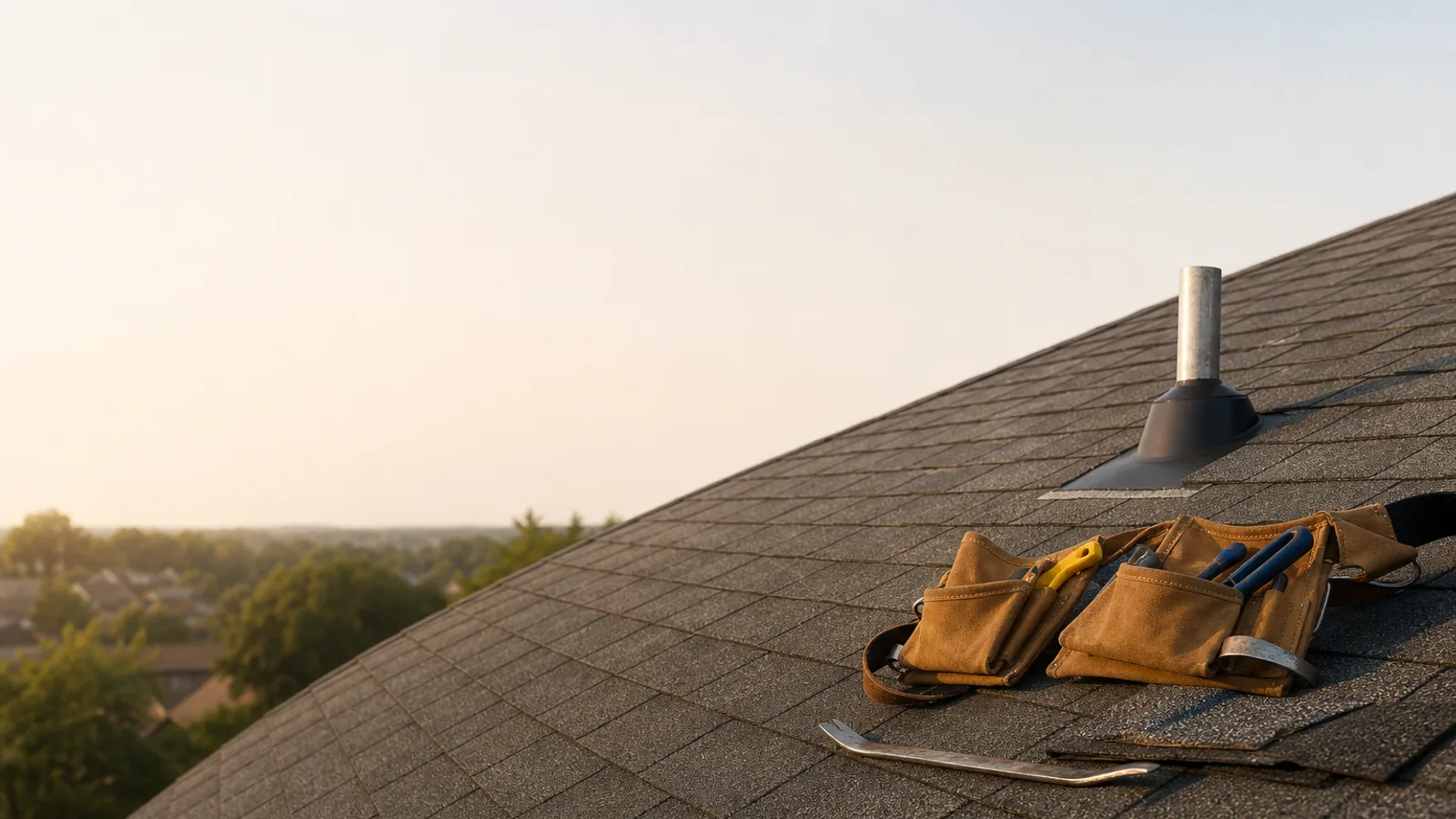
Minor shingle fixes may take a few hours on the roof, but the full repair process can stretch into weeks once scheduling, materials, and permits are factored in. Here is how long each stage usually takes and what you can do to keep your project moving.
How long does roof repair actually take on the day of the job?
When homeowners ask how long roof repair takes, they are usually thinking about the crew on the roof. For minor work, that part is surprisingly quick. Industry guidance groups repairs into three buckets. Simple fixes, like swapping out a handful of shingles, re-sealing flashing, or replacing a pipe boot, often take about 1 to 5 hours of labor. That means a crew can arrive mid-morning and be cleaned up before dinner for many small issues.
As problems get more complex, the time climbs. Moderate repairs that chase an active leak, rebuild a section of flashing, or address multiple problem spots typically span 1 to 3 days of work. Major structural repairs, such as replacing damaged roof decking or fixing framing, can stretch from 2 days into a full week or more, especially if there are surprises once the old materials are opened up. These ranges match what industry timelines report for repair work. The important point for you is that the ladder time is only part of the story, and you should plan for a longer calendar timeline than the actual hours on the roof.
- Minor asphalt shingle repairs usually fit into a half day of work.
- Moderate leak tracking and flashing fixes commonly take 1 to 3 days.
- Structural deck or framing repairs can require several days or longer.
- Unexpected hidden damage can extend even a simple job once the roof is opened.
Why does a simple roof repair often take weeks on the calendar?
You might think that if the roof work itself is a few hours, the whole process should be done in a day. In practice, the total timeline from first call to final cleanup is longer. Industry sources that track roof projects show that even straightforward jobs often stretch from 2 to 6 weeks once all the moving parts are considered. You have scheduling with the contractor, material ordering, any coordination with your insurance company, possible permit applications, and of course weather delays.
Similar timelines are reported for full replacements, where the install is only 1 to 3 days, but the whole project runs 3 to 6 weeks. Repairs follow the same pattern, just scaled down. For example, a contractor may be able to do the work in a single day, but you still have to wait your turn on the calendar, and sometimes an inspector or manufacturer warranty process has to be booked as well. The key takeaway is that the overall duration is usually measured in weeks, not just in the number of hours a crew is on your roof.
How do minor, moderate, and major roof repairs differ in timeline?
The label put on your repair has a big impact on how long everything takes. Minor repairs are surface-level fixes. Think torn or blown-off shingles, a cracked vent boot, or a small piece of exposed flashing. These are typically handled in 1 to 5 hours of labor, and they often do not require permits if the affected area is small, which keeps the process fairly quick once you are on the schedule.
Moderate repairs mean the problem is more than cosmetic. That might be a leak that needs investigation, damaged underlayment around a chimney, or multiple soft spots that require removing and reinstalling several courses of shingles. These commonly take 1 to 3 days of active work and may cross the size threshold where your local building department wants a permit. Major structural repairs are in a different category. Replacing sections of wood decking or correcting framing issues can run several days to a week or more, because the crew is essentially rebuilding part of your roof system. On the calendar, industry guidance suggests even these types of repairs can extend to multiple weeks or a few months when you add in scheduling, structural inspections, and any insurance back-and-forth.
- Minor repair: small surface issue, 1 to 5 hours on-site in many cases.
- Moderate repair: larger leak or multiple areas, often 1 to 3 days of work.
- Major repair: structural or widespread damage, 2 to 7 or more days of labor.
- Overall process: from first contact to completion, often several weeks.
How do permits and local rules affect your roof repair timeline?
Permits are one of the most misunderstood pieces of the schedule. In many municipalities, you do not need a permit for small repairs below a certain size. One example used by a city building department is a threshold of 100 square feet. Under that, basic repairs are treated as minor and typically do not trigger a permit requirement. Over that size, or if there is any structural work, you enter full re-roof or major repair territory, and permits are expected.
Once a permit is required, the clock can stretch. The time to prepare drawings, submit the application, and wait for approval varies by town. It might be a couple of days in a smaller township or longer in a busy city. After the work is done, some jurisdictions require an inspection before the permit is closed, which can mean another visit to the property. In Pennsylvania, New Jersey, and Maryland, each town or county sets its own thresholds, but the pattern is similar to the example: small surface fixes are quick, and larger or structural jobs come with added permitting time.
- Small repairs under roughly 100 square feet may not need a permit.
- Larger repairs and structural work typically require a building permit.
- Permit review and approval can add days or weeks before work starts.
- Final inspections may be needed before the permit is officially closed.
What can you do to keep your roof repair moving on schedule?
While you cannot control the weather or your town's permit office, you do have a lot of influence over whether your repair moves quickly or drags on. The first step is to call early. As soon as you see missing shingles, staining on ceilings, or active drips, document the issue with photos and reach out. Waiting does not just risk more damage. It also pushes you further back in the contractor's schedule, especially in storm-heavy seasons when demand spikes and timelines can stretch toward the longer end of the 2 to 6 week range mentioned in industry guidance.
Once you have a contractor lined up, respond quickly on decisions. Approving the written scope, material choices, and any change orders without long delays keeps you in your scheduled slot. If your insurance company is involved, get them the documentation they ask for promptly. Flexibility helps as well. Being open to weekday start dates, or agreeing to a weather window instead of a single fixed day, lets the roofer slot your job in as soon as conditions allow. If you want to understand the full process in more detail, including how repair jobs are scoped and priced, you can review our roof repair service overview before you schedule.
- undefined
- undefined
- undefined
- undefined
- undefined
- undefined
- undefined
- undefined
Frequently asked questions
- How long does a typical roof repair take from start to finish?
- For many homeowners, the on-roof work is only part of the timeline. Minor repairs may be completed in 1 to 5 hours of labor, while moderate repairs can take 1 to 3 days and major structural work 2 to 7 or more days. When you include scheduling, material delivery, permits, and inspections, industry sources report that even simple projects often run 2 to 6 weeks on the calendar.
- Can a roof leak be fixed in one day?
- In many cases, yes. Industry timelines note that most repair jobs are completed in about one day of active work, especially when the leak source is straightforward and materials are on hand. The exceptions are complex leaks that require opening up larger sections of the roof or replacing decking, which can push the work into multiple days. The calendar time may still be longer because you have to wait for an open slot on the schedule.
- Do I need a permit for a small roof repair?
- That depends on your local building department, but many follow a pattern similar to the example of treating repairs under 100 square feet as minor and not requiring a permit. Once you pass that size or touch structural components, permits are typically required and inspections may be scheduled. Your contractor should know your township's thresholds and factor any permit time into the expected timeline.
- Why is my roof repair scheduled weeks out when the work is only a few hours?
- Roofers have to juggle many jobs, weather windows, crew availability, and material deliveries. Even minor repairs that take less than a day of work are slotted between larger projects and around rain or high wind. Industry guidance says that when you add scheduling and logistics, the whole process for a simple repair often stretches into the 2 to 6 week range, especially during peak storm seasons.
- How long do major structural roof repairs usually take?
- Major structural repairs go beyond surface shingles and into the wood deck or framing. Industry sources indicate that these can require 2 to 7 or more days of active work, because crews may need to remove large sections of roofing, replace damaged wood, and reinstall the roof system properly. On top of that, permits and inspections are often involved, which can extend the total calendar time to several weeks or in complex cases even a few months.
- What can I do to speed up my roof repair timeline?
- You can act quickly on your side of the process. Call for an inspection as soon as you see a problem, send photos and information promptly, and decide on scope and materials without long delays. If a permit is needed, get signatures or documentation back to your contractor right away. Being flexible about exact dates and allowing a weather window also helps your roofer fit the work in as soon as conditions and crew availability line up.
Talk to All Pro Home Improvement and Roofing about roof repair →