Picking the lowest roof repair estimate can look smart in the moment but often means missing work that has to be redone later. Here is how the cheap quote really works, what a solid repair should include, and how to compare bids in PA, NJ, and MD.
Why the cheapest roof repair quote is almost never the best value
When you line up roof repair estimates, it is normal to look straight at the bottom line and feel pulled toward the lowest number. The problem is that a roof is a system, and cutting the price usually means cutting out part of that system. Industry data on 2026 residential repairs shows how wide the ranges really are: a simple leak patch can run about 150 to 500 dollars, while a more involved slope repair or deck patch can reach into the thousands. When you see a quote that looks too good to be true, it usually ignores this reality and pretends your problem is the tiniest, simplest version.
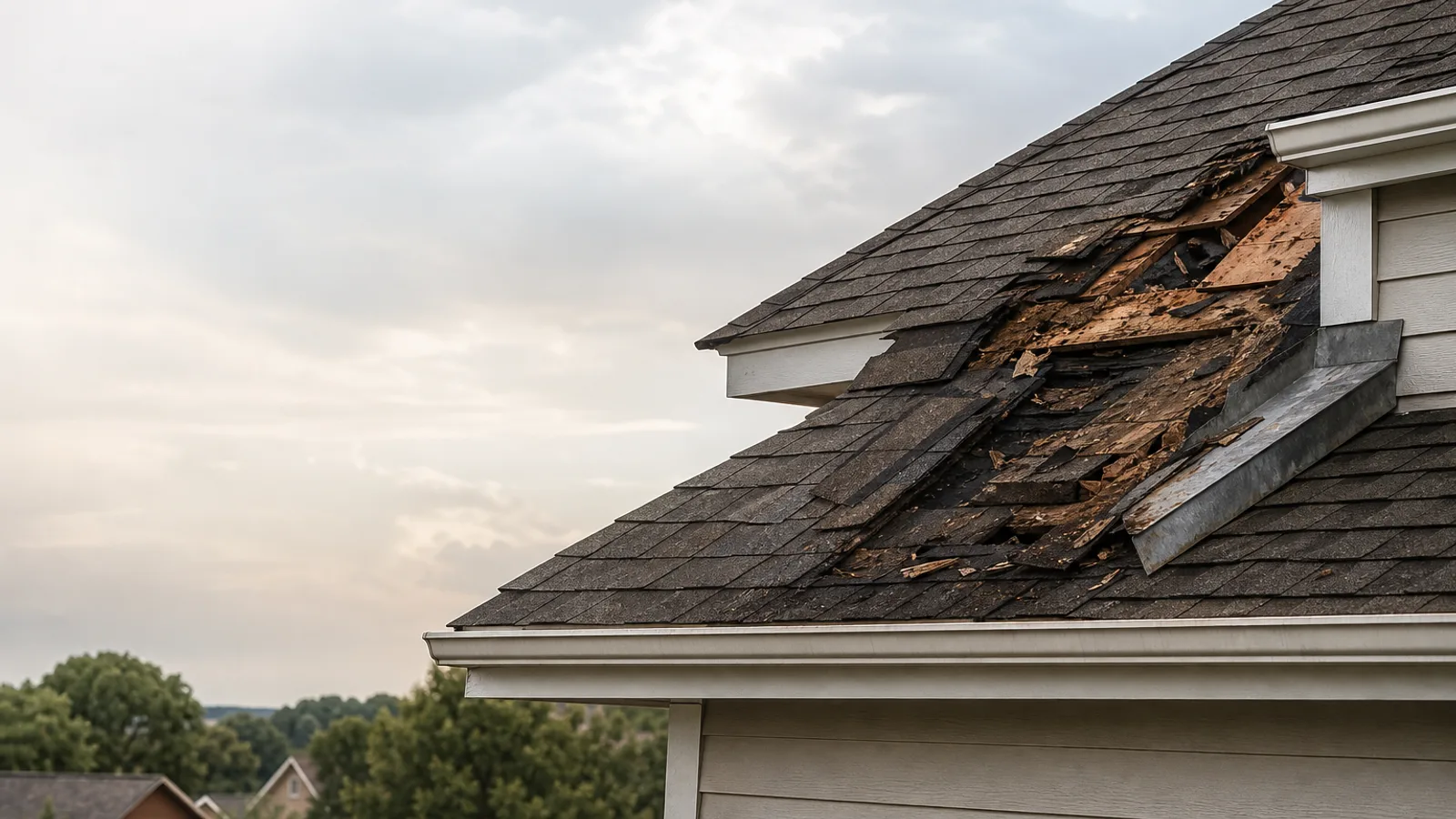
For homes in Pennsylvania, New Jersey, and Maryland, weather swings and older housing stock add more variables. A leak around a vent might need only a boot swap, or it might uncover rotted sheathing underneath. A trustworthy contractor will price for what they can see and build in a realistic allowance for what they might uncover. A contractor chasing the lowest bid will price only what is obvious and then either hammer you with change orders or cover up problems without fixing them. That is how a cheap repair turns into the next leak, and the next call, a season or two later.
- Cheapest bids often assume the smallest possible repair scope.
- They rarely budget for hidden damage in decking or underlayment.
- Low numbers usually leave out code-required details like proper flashing.
- Short-term savings can lead to repeat leaks and extra repairs later.
What a realistic roof repair actually costs, by problem type
To understand why some bids come in so low, it helps to know real-world price ranges. An industry report on 2026 residential roofs breaks repairs down by the specific issue. Quick patches or basic leak fixes fall around 150 to 500 dollars. Swapping out a failed pipe boot typically lands between 150 and 450 dollars. When you get into metal work, like step, wall, or drip-edge flashing repairs, you are more often in the 400 to 1,200 dollar range because shingles must be removed and reinstalled correctly around those areas.
More complex repairs, such as valley work, can range from about 600 up to 2,200 dollars depending on length and how much has to be rebuilt. If your roofer needs to open the roof and replace a sheet of decking, that kind of patch commonly runs around 800 to as high as 3,000 dollars since it involves tear-off, carpentry, and re-shingling. Replacing an entire slope on a typical home runs roughly 2,500 to 8,000 dollars. Looking at these bands, an ultra-low bid for something that should fall in the higher range is not a bargain. It is a signal that the contractor does not intend to do the full scope that a proper repair requires for your situation.
- Leak patches: roughly 150 to 500 dollars depending on access and materials.
- Pipe boot replacement: commonly 150 to 450 dollars per penetration.
- Flashing repairs: often 400 to 1,200 dollars due to labor and detail work.
- Decking patches: about 800 to 3,000 dollars when sheathing must be replaced.
How lowball bids quietly skip flashing and hidden damage
Most leaks do not start in the middle of a clean shingle field. They start where the roof is interrupted: vents, chimneys, skylights, walls, and valleys. Technical guidance from the U.S. Department of Energy stresses that any repair around these areas should include a full inspection of the flashing and replace or add components as needed, installed in a way that sheds water in a shingle-like sequence. That extra care takes time and material, so it costs money. When a bid looks suspiciously cheap, flashing work is one of the first places it gets trimmed.
Hidden damage is the other common blind spot. Moisture can travel under shingles, into insulation, and across roof decking before it ever stains a ceiling inside. Insurance and industry data show that many so-called small repairs end up more expensive because prior work missed damp insulation or soft decking and only treated the symptom. Low bidders often write estimates that assume every leak is simple, with no allowance for opening up and replacing compromised wood or underlayment. In the field, they may paper over soft spots instead of removing them, which solves nothing. You feel good about the price until the same area leaks again and you pay someone else to tear it apart correctly.
- Penetration flashing is often left in place even when worn or incorrectly installed.
- Wall and chimney intersections may only be sealed with caulk instead of proper metal.
- Roofers may skip checking for soft or discolored decking under leak areas.
- Insulation that has absorbed moisture can be left in place to save labor.
When repair stops making sense and full replacement is smarter
There is a point where patching the same worn-out system no longer pays off. Residential cost analysis suggests a simple rule of thumb: when the cost of a repair starts to get close to about 30 percent of what a full replacement would run, it is time to talk seriously about replacing instead of repairing. That rule lines up with claim data that shows repair costs have climbed in recent years, while replacement costs have climbed even faster. An average roof repair claim was a little under five thousand dollars in recent data, while average replacement claims were in the mid tens of thousands, so repeated repairs can quietly eat into the value of a future new roof.
This tipping point matters most when your roof is already near the end of its useful life or has a history of problems. Dropping several thousand dollars on a major valley rebuild or multiple decking patches might stop the leak for a while, but it leaves old shingles, old underlayment, and old flashings in place. That money is also not buying you the new warranty or updated materials that come with a full replacement. A careful contractor in PA, NJ, or MD will walk you through both options and explain where your quote falls in relation to that 30 percent guideline so you can choose based on long-term cost, not just the lowest immediate number.
How to read your roof repair estimates so you are not burned later
The best defense against the cheapest-bid trap is learning how to read a roof repair proposal. A solid estimate does more than quote a dollar amount. It spells out which materials are being used, where flashing will be removed and replaced, how many square feet of shingles or membrane are included, and what the roofer will do if they uncover rotten decking or wet insulation. If you are comparing bids and one sheet is a single vague line like “repair leak at chimney,” that contractor is counting on you not noticing what is missing.
You also want to see clear language about warranties, both on materials and labor. Consumer protection guidance warns that using unlicensed or uninsured contractors, or installers who do not follow manufacturer requirements for things like underlayment, flashing, and ventilation, can leave you without warranty coverage when there is a problem. Verify that the contractor is properly insured and that permits are included where your township requires them. If you want a feel for what a thorough scope looks like, pull up a detailed guide and compare it to the line items on your quotes. As you talk with roofers, you can also ask about their approach to roof repair so you understand exactly what you are paying for before you sign.
- Look for specific descriptions of materials, not just “repair roof.”
- Make sure penetration and wall flashing work are included where you have leaks.
- Ask how the roofer will handle rotten decking or wet insulation if they find it.
- Confirm what labor and material warranties you will actually receive in writing.
- undefined
- undefined
- undefined
- undefined
- undefined
- undefined
- undefined
- undefined
- undefined
Frequently asked questions
- Is it ever smart to pick the cheapest roof repair quote?
- Choosing the lowest price can work only if the scope and materials are identical to the other bids and the contractor is properly insured and qualified. In practice, very cheap quotes often leave out key steps like replacing flashing or checking the deck, which leads to more leaks later. Comparing line-by-line scopes is more important than focusing on the final dollar figure.
- How much should a basic roof leak repair cost on a house?
- Recent industry data for 2026 puts simple residential leak repairs roughly in the 150 to 500 dollar range, depending on access and materials used. If the problem involves damaged flashing, valleys, or decking, costs commonly climb into the several-hundred to several-thousand-dollar range. A price far below these bands is usually a warning about corners being cut.
- Why do some roofers charge so much more than others for the same repair?
- Often the repair is not actually the same. Higher quotes may include new flashing, underlayment, or deck work that a cheaper bid skips, and they may account for the time needed to meet code and manufacturer instructions. Labor, insurance, and the quality of materials also vary. The only fair comparison is between detailed written scopes, not short descriptions.
- When does it make more sense to replace my roof instead of repairing it again?
- A common guideline is that once a repair starts to approach about 30 percent of what a full replacement would cost, you should seriously consider putting that money toward a new roof. This is especially true if your roof is older or has a history of leaks. At that point, replacement can give you a fresh warranty and newer materials instead of pouring cash into a worn-out system.
- Can a cheap roof repair void my shingle or membrane warranty?
- Yes, it can. Manufacturer warranties typically require that the roof be installed and repaired according to their specifications, including proper flashing, underlayment, and ventilation. If a low-cost contractor cuts corners or uses non-approved methods, the manufacturer can deny future claims. That means saving a little now could leave you without coverage when a bigger issue shows up.
- How can I tell if a roof repair estimate is leaving out important work?
- Look for vague language and missing details. A solid estimate should list specific materials, the areas to be opened, any flashing to be replaced, and how underlying damage will be handled if found. If you do not see these items, or if one contractor is the only one not mentioning them, that is a strong sign their price is low because key steps were left off.
Talk to All Pro Home Improvement and Roofing about roof repair →