If you are not sure what shape your roof is in, a few careful checks can tell you whether you can wait, watch, or call a pro. This guide walks you through the first actions that protect your home and your wallet in Pennsylvania, New Jersey, and Maryland.
Why it pays to act early when you are unsure about your roof
If you are not sure what kind of shape your roof is in, you are not alone. Many homeowners in PA, NJ, and MD buy a home without solid records on the roof, or they simply lose track of when it was last inspected. The roof keeps working quietly until one day there is a stain on the ceiling or a shingle in the yard. By the time you see obvious leaks, water has usually been moving through the system for a while.
National building and insurance guides all land on the same basic advice: you should not wait for water in a bucket before you start paying attention. Guidance from homeowner education groups and insurers says that your own visual checks once or twice a year, plus periodic professional inspections, are the best way to stay ahead of trouble instead of reacting to it after a storm. When you do not know your roof’s history, taking the right first steps gives you a clearer picture so you can budget, plan, and avoid surprise damage. This article lays out those steps in plain language, in the order a roofing contractor would follow.
- Unknown roof condition is extremely common, especially after buying a home.
- Damage usually starts long before you see interior leaks or stains.
- Simple visual checks catch issues before they turn into major repairs.
- A basic plan now helps you avoid emergency work during a storm.
How to safely check your roof from the ground first
The first thing to do when you are uncertain about your roof is to stay on the ground. Climbing onto shingles you do not trust is a good way to get hurt or cause more damage. Home maintenance guides recommend starting with a slow walk around your house, looking up from different angles. A simple pair of binoculars can help you see details without ever leaving the yard.
From that vantage point, you are looking for patterns, not perfection. Scan for missing or slipped shingles, areas where shingles look darker or bald compared with nearby spots, and any sagging lines along the ridge or between rafters. Pay attention to metal flashings around chimneys, skylights, and where walls meet the roof, watching for gaps, rust, or pieces that look lifted. Also check that gutters are attached, reasonably straight, and not clogged with piles of grit or shingle pieces. If anything looks warped, patchy, or out of line, it is a sign that the roof deserves a closer look by a professional.
- Walk the full perimeter of your house and look up at the roof from several angles.
- Use binoculars to check shingle surfaces, ridge lines, and roof edges.
- Look for missing, cracked, curled, or noticeably bare shingles.
- Check that gutters and downspouts are attached and not overflowing debris.
What your attic and ceilings can tell you about hidden roof problems
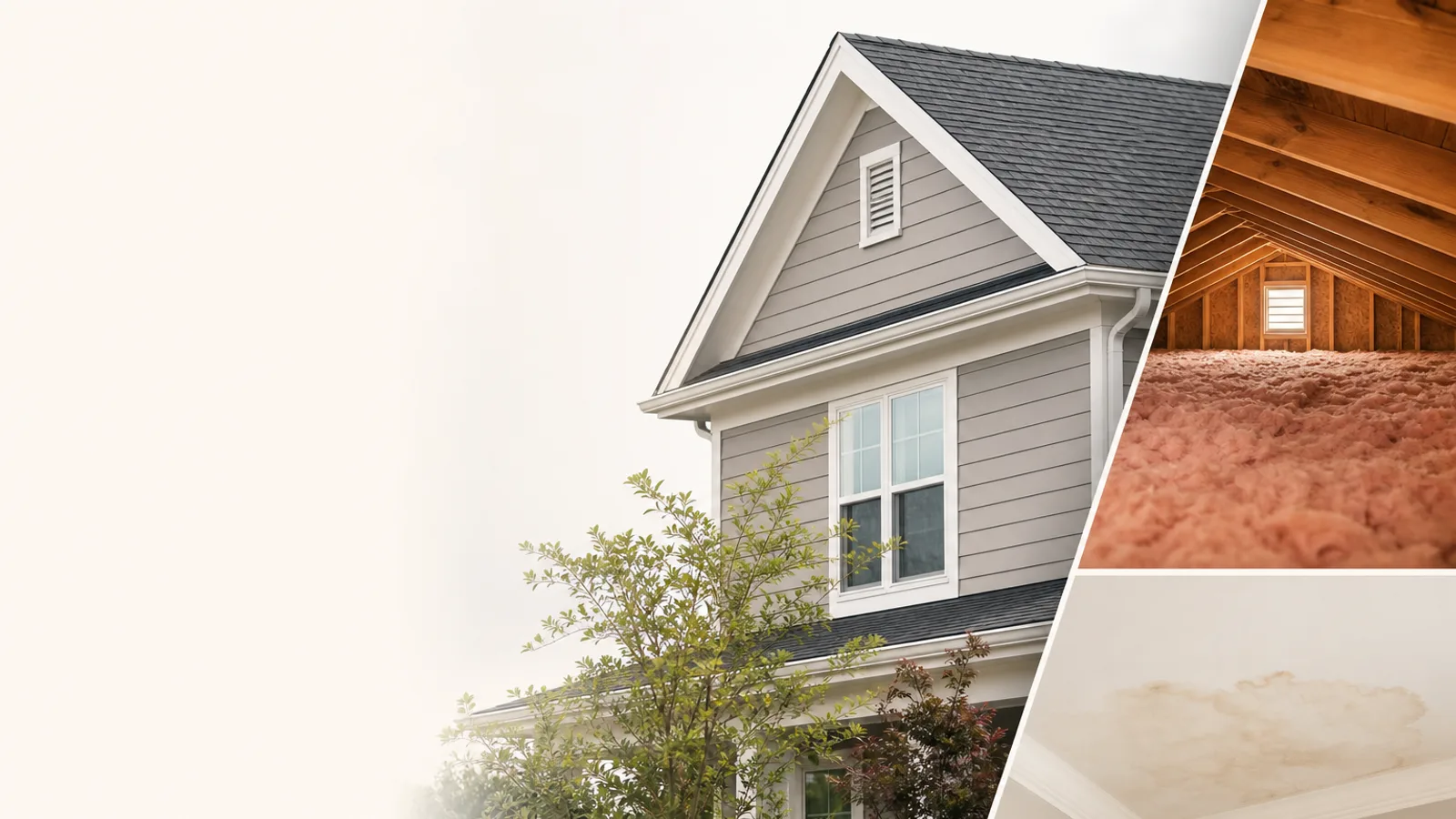
After the outside scan, the next safest and most revealing place to look is inside the house. National home and moisture guides stress that the attic often shows roof trouble long before the living room ceiling does. Grab a flashlight and pick a dry day. Step carefully on framing or solid flooring and avoid compressing insulation more than necessary. Turn off the attic light briefly and look for daylight coming through where it should not, such as around vents, chimneys, or between roof boards.
With the light back on, inspect the underside of the roof deck, rafters, and insulation for dark stains, damp spots, peeling surfaces, or mold-like growth. Pay close attention around penetrations such as plumbing vents, bath fans, and skylights, since these are common leak points. Inside the finished rooms below, look at ceilings and upper walls for yellow or brown rings, bubbling paint, or new cracks. Moisture from a roof leak often follows framing and only shows up several feet away from where the water is getting in. If you see any active drips, fresh staining, or a musty odor, you have enough evidence to justify a professional roof inspection soon.
Why roof age and history matter when you do not know the condition
Even if your roof looks passable from the ground and attic, its age is a big clue. Roofing manufacturers and inspection guides point out that material life spans are not just about the calendar, but they do offer a rough line in the sand. When a roof reaches the outer years of its expected life, minor problems tend to multiply and repairs become more frequent. If you do not know the age, you can sometimes piece it together from past permits, old listing sheets, or by asking previous owners.
Homeowner education resources advise that once a typical roof gets to about the 20 to 25 year mark, it often deserves closer attention, even if there are no dramatic signs of damage yet. Insurance toolkits recommend stepping up inspection frequency as the roof ages, since small cracks, worn sealant, and brittle shingles are more common on older installations. If you learn that your roof is well past the midpoint of its expected life and you also see early warning signs like curling shingles or staining in the attic, it is smart to bring in a qualified roofer for a detailed condition report and plan.
- Try to confirm roof age from permits, real estate records, or past owners.
- Older roofs are more likely to have brittle, cracked, or worn materials.
- Inspection frequency should increase as the roof gets closer to the end of its life.
- Age plus visible wear is a stronger warning sign than either factor alone.
When a professional roof inspection is the best first move
If the ground and attic checks leave you with questions, or if you see more than just cosmetic wear, the smartest early move is to schedule a professional inspection. Guidance from roofing and home improvement experts explains that a full inspection looks at things you cannot safely or easily see, including the condition of flashings, fasteners, sealants, and roof penetrations. It also evaluates drainage, ventilation, and overall structure, not just the shingle surface. This sort of visit is especially important if your roof is older, if there has been a recent storm, or if you are preparing to sell or refinance your home.
For homeowners in Pennsylvania, New Jersey, and Maryland, a local inspector familiar with the region’s weather patterns can point out weaknesses tied to snow loads, wind-driven rain, and freeze-thaw cycles. A thorough writeup should spell out current issues, their likely causes, and practical repair or replacement options. It also creates a paper trail that is useful when you talk to insurance companies or future buyers. If you want a structured, in-depth look at your roof from ridge to gutters, booking a roof inspection is often the most efficient way to move from guesswork to a clear action plan.
How often you should recheck a roof once you understand its condition
Once you know roughly where your roof stands, you do not just forget about it for another decade. Maintenance guides and insurance toolkits recommend a simple rhythm: do your own visual checks at least twice a year and schedule professional reviews on a regular cycle. Some homeowner resources suggest that an every-other-year professional visit is enough in the early years, tightening to yearly once the roof passes its first decade or shows signs of aging. The idea is to catch wear and tear while it is still minor.
You should also add extra checks after major events such as hail, strong windstorms, or heavy snowfall that slowly melts and refreezes. Each time, you repeat the same pattern: walk the exterior, look in the attic, and note any changes. Keeping a simple log of what you saw, when the last work was done, and any repair invoices gives you a roof history that future buyers, inspectors, and insurers will appreciate. Over time, this record helps you plan for larger work instead of being surprised by an emergency replacement.
- undefined
- undefined
- undefined
- undefined
- undefined
- undefined
- undefined
- undefined
Frequently asked questions
- What is the first thing I should do if I do not know my roof’s condition?
- Start with a safe, ground-level look at the roof, walking around your home and checking for missing shingles, obvious sagging, or damaged flashing without climbing onto the surface. Then inspect your attic and ceilings for stains or dampness, which can reveal hidden leaks and tell you whether a professional inspection is urgent.
- How can I tell if my roof needs a professional inspection or just monitoring?
- If you see active leaks, fresh stains, sagging, or areas where roofing materials look badly worn or missing, a professional inspection is recommended. If the roof looks generally intact, your attic is dry, and the roof is not especially old, you may be able to monitor it with regular checks, but an inspection still helps set a baseline.
- How often should I have my roof inspected if I live in Pennsylvania, New Jersey, or Maryland?
- Home maintenance guides commonly suggest that homeowners do their own checks once or twice a year and after major storms. Many experts recommend a professional inspection every couple of years for younger roofs, and more often once the roof is around a decade old or shows signs of aging.
- Why does the age of my roof matter if it does not leak yet?
- Roofing materials typically have a practical service life, and as they get older they become more brittle, lose protective granules, and rely more on aging sealants and flashings. Even without visible leaks, older roofs are more likely to develop small openings that can let water in, so age helps you judge how closely to watch and when to plan for repairs or replacement.
- Is it safe for me to walk on my own roof to check its condition?
- Most homeowner and safety guides advise against walking on the roof if you are not trained and equipped, especially when you already suspect problems. You can see a surprising amount from the ground with binoculars and from the attic, and a professional inspector has the safety gear and experience to move on the roof without damaging it.
- What information should I give a roofer when I schedule an inspection?
- Tell the roofer anything you know about the roof’s age, past repairs, and materials, and describe what you have already seen from the ground and in the attic. Mention any interior stains, recent storms, or specific areas that worry you, so the inspector can focus on likely trouble spots and give you a clear, tailored report.
Talk to All Pro Home Improvement and Roofing about roof inspection →