
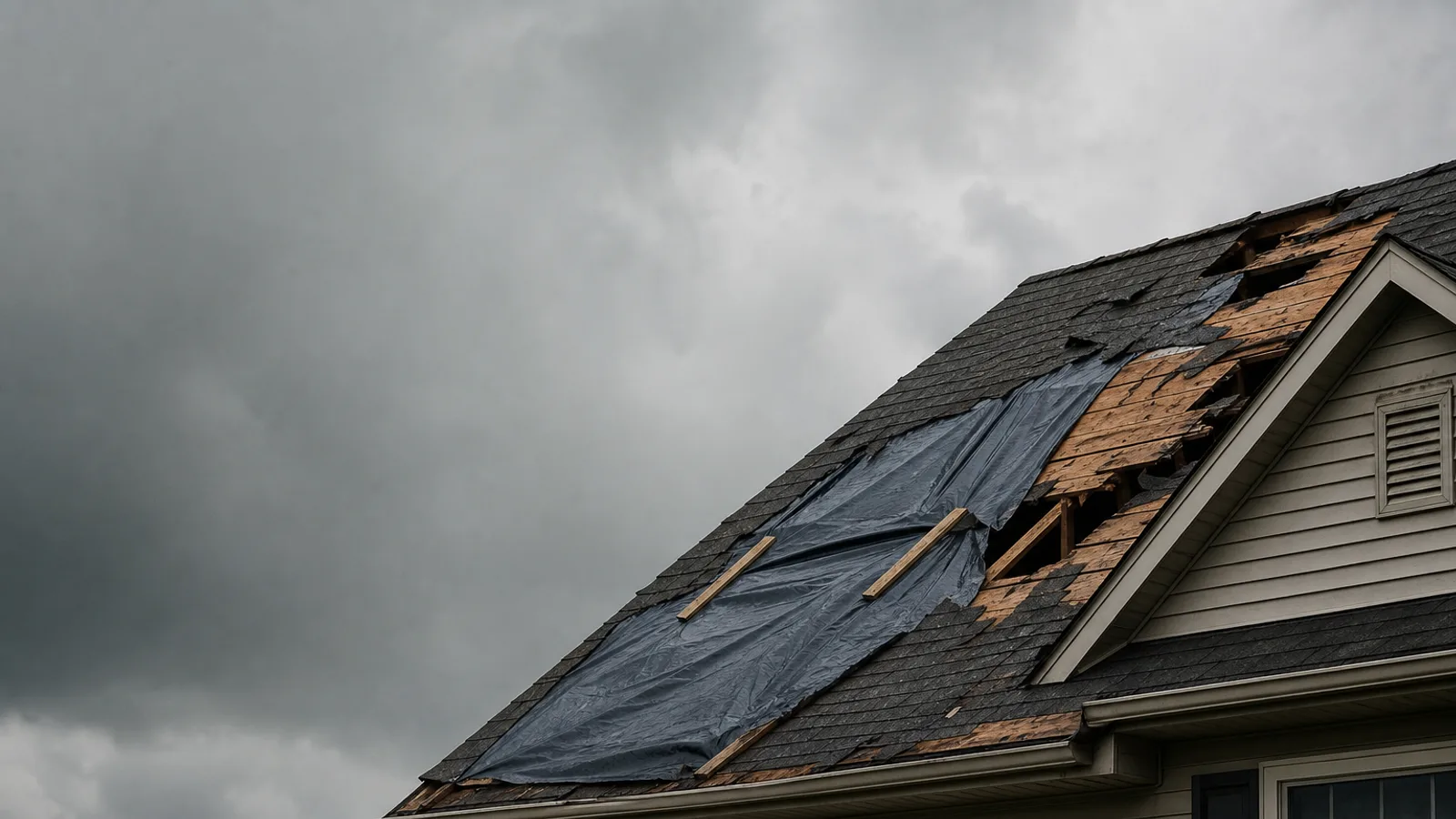
Not every blown-off shingle is a five-alarm fire, but some storm damage absolutely cannot wait. Here is how to tell what is truly urgent, what it usually involves, and how to protect your home until a roofer arrives in PA, NJ or MD.
What storm damage really counts as an emergency for your roof?
After a big storm, you might see shingles on the lawn or a stain in the ceiling and wonder if you need someone out tonight or if it can wait for normal hours. The difference matters, because emergency work is about stopping active damage and safety risks, not making the roof look perfect again. Guidance aimed at Pennsylvania and New Jersey homeowners points to a handful of red flags that move a situation into the urgent category: visible water flowing or dripping inside, significant sections of roofing blown off, loose or dangling materials, and any sign that structural elements may be compromised.
Technical wind guidance from federal building experts explains that high winds can loosen shingle sealant, pull at roof edges, and damage flashings. Once these parts lift, the next gust can peel back more of the roof and expose underlayment or deck boards. When you can see bare wood, daylight from the attic, or large missing areas from the ground, that is not a cosmetic issue. It is a path for water to move into insulation, wiring, and framing. In those situations, the emergency is not just tonight’s leak, but what the next storm could do if the roof is left open.
- Active leaks that are dripping or flowing inside living spaces
- Large patches of missing shingles or exposed wood from the ground
- Loose roofing or metal pieces that could fall or blow off
- Visible daylight or sky through the roof from the attic
- Sagging, cracked, or warped roof areas after a storm
How emergency storm roof repair actually works in PA, NJ and MD
Emergency service sounds like the whole roof will be rebuilt overnight, but that is not how it works in practice. Reputable contractors in Pennsylvania, New Jersey, and Maryland follow a similar rhythm. First is triage: they arrive, stay off unsafe areas, and assess how water is getting in. They will typically take photos before touching anything, since documenting the before condition is important for your own records and any claim through your insurer.
Once they understand what is happening, the priority is to stop water entering the building. That usually means installing a professionally secured tarp, patching a small hole, or sealing a section around damaged flashing. State and federal guidance stresses that this kind of work is temporary. The materials used and the way they are applied is intended to hold up through a short period of weather while you and the roofer plan permanent repairs. The full repair, whether that is replacing a section of shingles, reworking flashing details, or re-roofing a bigger area, is generally completed on a separate scheduled visit when the weather is calm and materials are on hand.
- Initial safety check from the ground and attic
- Photo and video documentation before any work
- Temporary measures like tarping and patching leaks
- Scheduling follow-up for permanent roof repair
- Communication with you about insurance paperwork
What emergency storm damage roof repair can cost and what drives the price
The research available for our region focuses more on process than exact dollar amounts, and that is important. Storm damage pricing swings based on how easy it is to access the area, how much of the roof is affected, the roofing material type, and whether structural components like sheathing or framing are involved. Temporary work like tarping is billed differently from a long-term repair, because it is labor heavy, often happens after hours, and must be done quickly in less than ideal conditions.
Consumer protection guidance in Maryland highlights another part of the cost picture. Your homeowner’s policy is generally written to put your property back to its prior condition with similar quality materials. That does not mean every upgrade is covered, but it does mean emergency steps taken to reasonably prevent further damage are often part of the overall claim. The exact coverage depends on your policy language and deductible, so you should treat emergency repair cost as one part of a larger recovery plan. Before signing anything, ask your contractor to spell out which line items are temporary protection and which are the long-term fixes so you can discuss them clearly with your insurer.
- Roof accessibility and pitch during the emergency visit
- Size of the damaged area and how far water has spread
- Roofing material and complexity of flashings or valleys
- Need for structural work to sheathing or framing
- Time of day and weather conditions during the repair
What to do in the first hour after you spot storm roof damage
The first hour after you notice damage sets the tone for everything that follows. Safety comes before photographs or phone calls. State-level roofing and storm guides all start with the same basic instructions: stay off the roof, watch for downed power lines outside, and turn off power near any ceiling leaks inside. Water around light fixtures or ceiling fans is more than just a nuisance and needs to be treated with caution.
Once you and your family are safe, you can start documenting what you see. Take clear photos of leaks, wet materials, and anything visible from the ground outside. If it is safe to enter, a quick look in the attic can tell you where water is traveling over insulation or along rafters. Cover belongings with plastic or move them out of the affected rooms to limit further damage. When you call for help, be as specific as you can about what is happening inside and what you can see from the yard. That helps the roofer decide whether this is a middle-of-the-night visit for tarping or an early next-morning appointment.
- Keep everyone off the roof and away from downed power lines
- Shut off breakers feeding wet ceilings or fixtures
- Take photos and short videos of leaks and visible damage
- Move furniture and valuables away from wet areas
- Make a clear, detailed note of what you see and when it started
How insurance, fraud risks and contractor choice affect emergency work
Storms that damage roofs across a neighborhood also bring an influx of people offering fast fixes. Consumer protection offices warn that this is a prime time for scams, especially in Maryland where state regulators have published detailed reminders about checking licenses and insurance before signing anything. They advise getting written estimates, reading the contract carefully, and making sure the person on your property is actually licensed for home improvement work in that state.
Insurance adds another layer. Official guidance in the Mid-Atlantic repeats that your insurer expects you to do what you reasonably can to prevent more damage, which includes calling a legitimate roofing contractor for emergency stabilization. At the same time, they encourage you to avoid rushing into a full replacement contract with the first person who knocks on your door. It is reasonable to get more than one opinion for permanent repairs once the house is dried in. When you work with a contractor who already understands storm documentation, policy requirements, and local building standards, you are less likely to run into problems down the road with incomplete paperwork or repairs that do not satisfy your carrier.
- undefined
- undefined
- undefined
- undefined
- undefined
- undefined
- undefined
- undefined
- undefined
- undefined
Frequently asked questions
- What storm roof damage is considered an emergency and cannot wait?
- Storm damage becomes an emergency when water is actively entering the house, when sections of the roof deck or wood are exposed, or when roofing materials are loose enough to risk falling or tearing off in the next wind. If you see significant missing shingles from the ground, daylight in the attic, or leaks spreading quickly, you should treat it as urgent. Smaller issues like a single drip or a couple of lifted shingles may still need prompt attention, but they usually can be scheduled in regular working hours.
- Should I go up on the roof myself after a storm to check for damage?
- You should stay off the roof after a storm, even if you feel comfortable on a ladder. Official safety and roofing guides repeat that wet, wind-damaged surfaces are unpredictable and can hide soft spots or loose materials. Inspect from the ground with binoculars if you have them and from the attic if it is safe and dry. Leave climbing and close-up assessment to a trained roofer with the right safety gear.
- Will my homeowners insurance cover emergency roof tarping after a storm?
- Many homeowner policies in states like Maryland are written to restore your home to its pre-loss condition and expect you to prevent further damage. Consumer guidance from state insurance regulators explains that reasonable emergency measures such as tarping or temporary patching are generally part of the overall storm repair process. Whether they are fully reimbursed depends on your specific policy terms, limits and deductible, so it is important to keep invoices and photos and check with your insurer directly.
- Is emergency storm damage roof repair the same as a full roof replacement?
- Emergency repair is usually focused on stabilizing the situation, not rebuilding the entire roof. It often involves tarps, sealants or temporary patches installed quickly to keep water out until weather improves and a full scope of work can be planned. A full replacement is a separate, larger project that follows once the damage is thoroughly inspected, materials are chosen and your insurance claim, if any, is sorted out.
- How do I avoid roofing scams after a big storm in Pennsylvania, New Jersey or Maryland?
- Consumer protection agencies warn that storm events attract unlicensed contractors and high-pressure sales tactics. To protect yourself, verify that any roofer you let on your property has proper licensing and insurance in your state, ask for written estimates, and avoid signing anything you do not understand. It is reasonable to get more than one bid for permanent repairs, and you should be cautious of anyone who demands large upfront cash payments or pressures you to sign on the spot.
- What should I ask a roofer before agreeing to emergency storm damage work?
- Ask how they will document the damage before starting, what specific temporary measures they plan to use, and how long those measures are expected to last. You should also ask whether the visit covers only emergency stabilization or includes some permanent repair, and how they will separate those charges on the invoice. Finally, confirm that they are familiar with insurance documentation in your state and that they carry the required licenses and liability coverage.
Talk to All Pro Home Improvement and Roofing about storm damage roof repair →