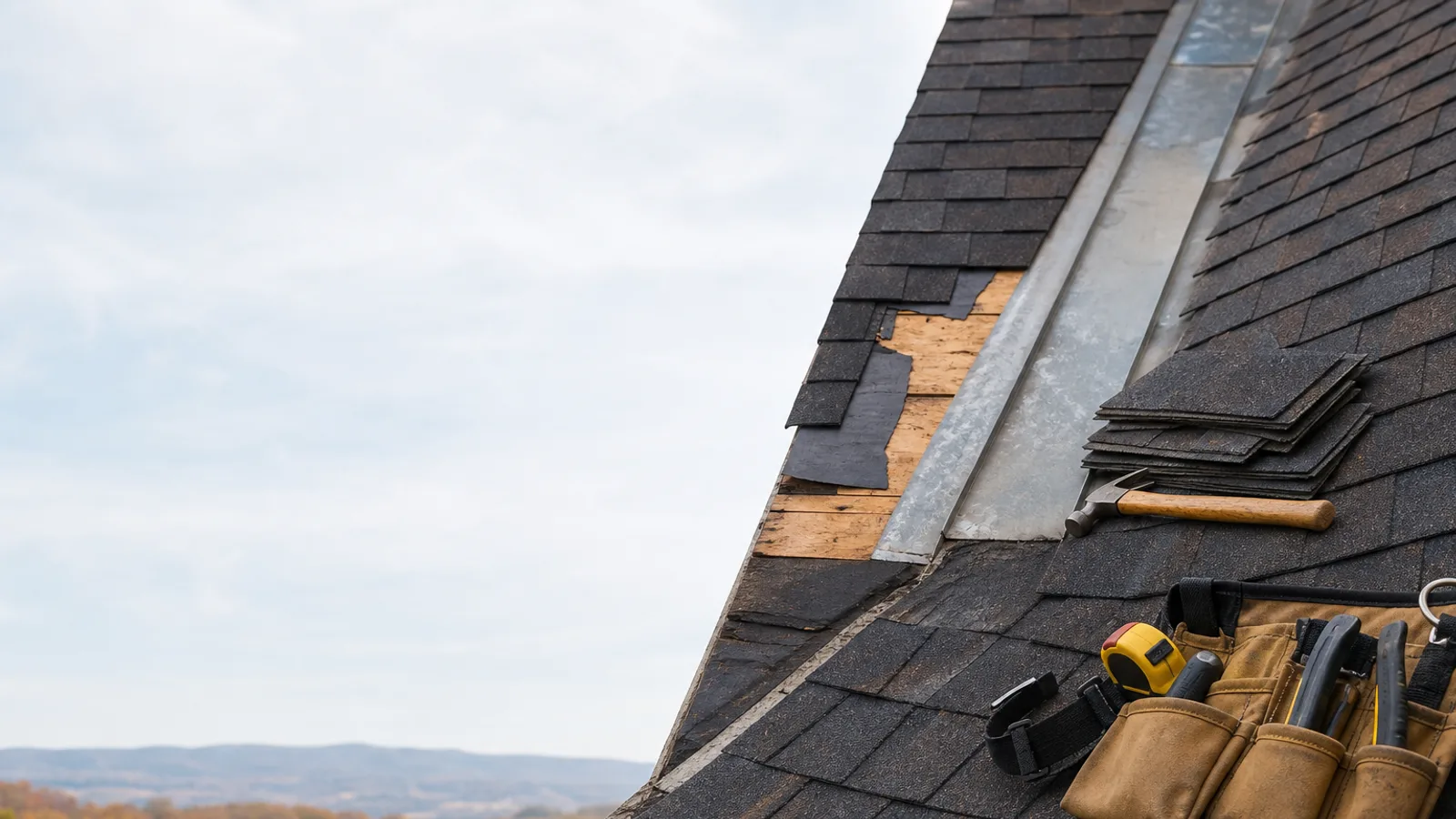
You can replace a few shingles on a Saturday, but not every leak is a DIY project. Here is how cost, risk, code rules, and long term performance really change when you tackle roof repairs yourself instead of calling a licensed roofer.
What really changes when you DIY a roof repair instead of calling a roofer?
When you climb the ladder yourself, the biggest thing that changes is not just the labor bill. You take on the risk, the code responsibility, and any mistakes that show up as leaks months from now. In the Mid Atlantic, typical professional repair bills range from a couple hundred dollars for minor fixes to several thousand when water has run under shingles and into decking, so it is natural to wonder if you could save that money by doing it yourself.
The catch is that roof systems are more than just shingles. Proper repairs have to deal with underlayment, flashing, nail patterns, rust resistant fasteners, and minimum slopes that local standards spell out. State rehabilitation and housing guidelines in Maryland, for example, require that repaired roofs be weather tight, that damaged shingles and flashing be corrected, and that accessories and fasteners resist corrosion. If a DIY patch does not hit that mark, you may not see the problem right away, but the next storm will find it.
How do DIY and professional roof repair costs compare in PA, NJ, and MD?
Out of pocket, DIY is cheaper on day one because you only buy materials and maybe a tool or two. If you are replacing a handful of shingles or sealing a small exposed nail head in an easy to reach spot, you might only spend for a bundle of matching shingles and a tube of roofing sealant. Regional cost studies for the Mid Atlantic put these small professional repairs in the neighborhood of 150 to 400 dollars for minor patches and 200 to 600 dollars when a pro replaces several shingles, which shows the labor and overhead you are skipping when you do it yourself.
Once a leak touches flashing, valleys, chimneys, or the roof deck, the money picture changes. In Pennsylvania, professional repairs commonly run 450 to 2,650 dollars overall, with an average bill around 1,050 dollars. Typical price ranges there are about 200 to 800 dollars to replace a failed pipe boot, 350 to 1,550 dollars for missing or wind lifted shingles, and 350 to 2,050 dollars to repair flashing. Valley leaks tend to fall roughly between 550 and 3,250 dollars, while work that includes removing and replacing damaged roof decking can run from around 1,200 all the way up to 7,400 dollars depending on how far water traveled and how hard the roof is to access. A DIYer might buy the materials for far less, but without knowing how deep the damage goes, it is easy to under scope the job and end up paying a pro later to redo both the repair and any new damage that happened in the meantime.
- Minor pro repairs in the Mid Atlantic often cost 150 to 400 dollars.
- Replacing several shingles with a pro typically runs about 200 to 600 dollars.
- Flashing repairs by a contractor are often in the 300 to 900 dollar range regionally.
- In Pennsylvania, more involved repairs including decking can climb above 1,200 dollars.
What hidden risks do DIY roof repairs carry that pros plan for?
On a roof, the risks you see like height and ladder safety are only part of the picture. Experienced roofers use harnesses, anchors, and proper footwear because one slip on a steep or wet slope can be catastrophic. They also know how to set up staging or choose ladder locations that do not damage gutters or siding. When you go the DIY route, you are trading their safety systems for whatever you can rig from what you have on hand.
There are also technical and legal risks that do not show up in a YouTube video. Mid Atlantic housing and rehab standards spell out that roofing repairs must leave the structure weather tight, require rust resistant nails and accessories, and set minimum slopes for certain shingle types. If you install shingles on a slope that is too low, or you skip proper step flashing at a wall because it looks like extra work, you may create a leak path that is not obvious until water has spread. That can turn a simple shingle swap into a future valley or decking repair worth thousands, according to current cost data for Pennsylvania and the broader region.
- Fall and injury risk from working at height without professional safety gear.
- Hidden water damage you may not spot when lifting a few shingles.
- Incorrect flashing or nail placement that slowly channels water into the roof.
- Potential warranty or insurance headaches if work is not to manufacturer or code standards.
What do state rules in PA, NJ, and MD change about who should do the work?
In Maryland, roof repair is not just a handyman task. The state treats residential roofing as home improvement work that falls under the Home Improvement Commission. That means contractors who repair or replace residential roofs are expected to hold a specific license, carry proper insurance, and put their license number in the contract. The state also operates a guaranty fund that can help homeowners who lose money because a licensed contractor fails to perform properly, which is a protection you do not have if you do the job yourself or hire an unlicensed side gig.
Consumer advisories from the Maryland Insurance Administration go even further on storm and leak repairs. They urge homeowners to check that any roofing contractor has the required license and insurance, to get at least three bids, and to avoid anyone asking for large payments before any work is done. New Jersey and Pennsylvania also tie roofing work into building and construction codes that reference national standards for how repairs and alterations must be handled, which means the work is not just about stopping a leak but doing so in a way that fits the code book. For a homeowner, this all adds up to a simple rule of thumb. Once a roof repair becomes more than a truly minor patch, state level rules make hiring a properly licensed contractor the safer move.
When does DIY roof repair make sense and when should you hire a pro?
There are a few narrow situations where doing your own roof repair can be reasonable if you are comfortable on a ladder and can work safely. Replacing one or two tabs on a low slope, easily accessed part of an asphalt shingle roof, or sealing a freshly exposed nail on a ridge cap, are examples where you can follow manufacturer instructions, match the existing material, and keep risk low. The key is that the damage is truly isolated, the roof structure is sound, and you are not guessing about where the water is coming from.
Once you are dealing with persistent leaks, flashing around chimneys or walls, skylights, valleys, or any sign of soft or rotten wood, the job belongs with a pro. Cost breakdowns from the Mid Atlantic show how quickly these repairs move from a few hundred dollars into the four figure range because water often travels away from the visible stain or missing shingle. Roofing standards in Maryland also distinguish between repairs to an otherwise functional roof and full replacement when the system is nearing the end of its service life. If your roof is older, leaking in multiple places, or clearly sagging, you are better off having a contractor evaluate whether to repair or replace rather than chasing spot fixes on your own. For more involved issues, it is worth reading up on how a professional roof repair service is typically scoped and priced before you decide.
How should you evaluate bids if you decide against DIY roof repair?
If you look at the numbers and decide the roof problem is beyond your comfort zone, the next step is choosing the right contractor, not just the cheapest one. Consumer protection guidance from Maryland suggests getting at least three written bids for repair work and checking each company for the proper license and insurance. You want each estimate to spell out what type of leak you have, how far the contractor expects to open up the roof, what specific components they plan to replace, and whether their price could change if they find hidden damage in the decking or framing.
Pay attention to whether a contractor is using the correct terminology around flashing, valleys, and underlayment and whether they mention following manufacturer installation instructions for your type of shingle. A vague promise to "fix the leak" without identifying the source can leave you paying for repeated visits. It also helps to ask what kind of workmanship warranty they offer on the repair and whether they have experience working with your particular roof pitch and material. That way your comparison is not just about initial cost ranges, such as the 300 to 900 dollars often cited for flashing repairs in this region, but about the odds that you only have to pay once.
- undefined
- undefined
- undefined
- undefined
- undefined
- undefined
- undefined
- undefined
Frequently asked questions
- Is it cheaper to repair a roof myself than to hire a roofer?
- Your cash outlay is usually lower if you do the work yourself because you only buy materials, but that leaves you taking on the risk of mistakes and hidden damage. In the Mid Atlantic, pros often charge 150 to 400 dollars for minor patches and 200 to 600 dollars to replace several shingles, which covers their labor, tools, and know how. If a DIY repair fails and causes more water damage, the eventual professional bill can easily exceed what you would have paid up front.
- When is a roof leak too serious for DIY repair?
- A leak is generally too serious for DIY once it involves flashing, valleys, chimneys, skylights, or any sign of soft decking or structural movement. Cost data for Pennsylvania show that valley leaks and repairs with decking replacement can run from roughly 550 to well over 1,200 dollars because the water often spreads. At that point you need a contractor who can open up the area safely, inspect the structure, and rebuild it to current standards.
- Do I legally need a licensed contractor for roof repair in Maryland?
- In Maryland, residential roof repair falls under the state's home improvement laws, which means contractors doing this work are expected to hold a Maryland Home Improvement Commission license. State consumer guidance also warns homeowners to verify licenses, insurance, and bonding before hiring anyone after a storm or leak. While you are allowed to work on your own home, if you hire someone else, using a licensed contractor is what unlocks protections like the state guaranty fund.
- How much does professional roof repair usually cost in Pennsylvania?
- Current estimates for Pennsylvania put typical professional roof repairs between about 450 and 2,650 dollars, with a common bill near 1,050 dollars. Smaller jobs like replacing a pipe boot may run 200 to 800 dollars, fixing missing or wind damaged shingles about 350 to 1,550 dollars, and chimney or skylight flashing in the 850 to 4,650 dollar range. Repairs that include replacing rotten roof decking can climb from around 1,200 up to 7,400 dollars depending on roof size and access.
- What mistakes do DIY roofers make that can cause future leaks?
- Common DIY problems include reusing or skipping flashing, driving nails in the wrong locations, using the wrong materials for the roof pitch, and relying too much on caulk instead of proper mechanical details. Housing rehab standards in Maryland emphasize rust resistant nails, correct accessories, and keeping roofs weather tight, which are easy to miss if you are guessing. These mistakes might not leak immediately, but they can let water travel under the surface and show up months later inside your home.
- How many contractor estimates should I get before roof repair?
- Consumer protection agencies in the Mid Atlantic recommend getting at least three written bids for roof repairs, especially after storms. Multiple estimates help you understand whether contractors agree on the cause of the leak, how extensive the work should be, and how their prices align with regional ranges such as 300 to 900 dollars for many flashing repairs. Comparing details also makes it easier to spot offers that seem too good to be true or that skip important steps.
Talk to All Pro Home Improvement and Roofing about roof repair →