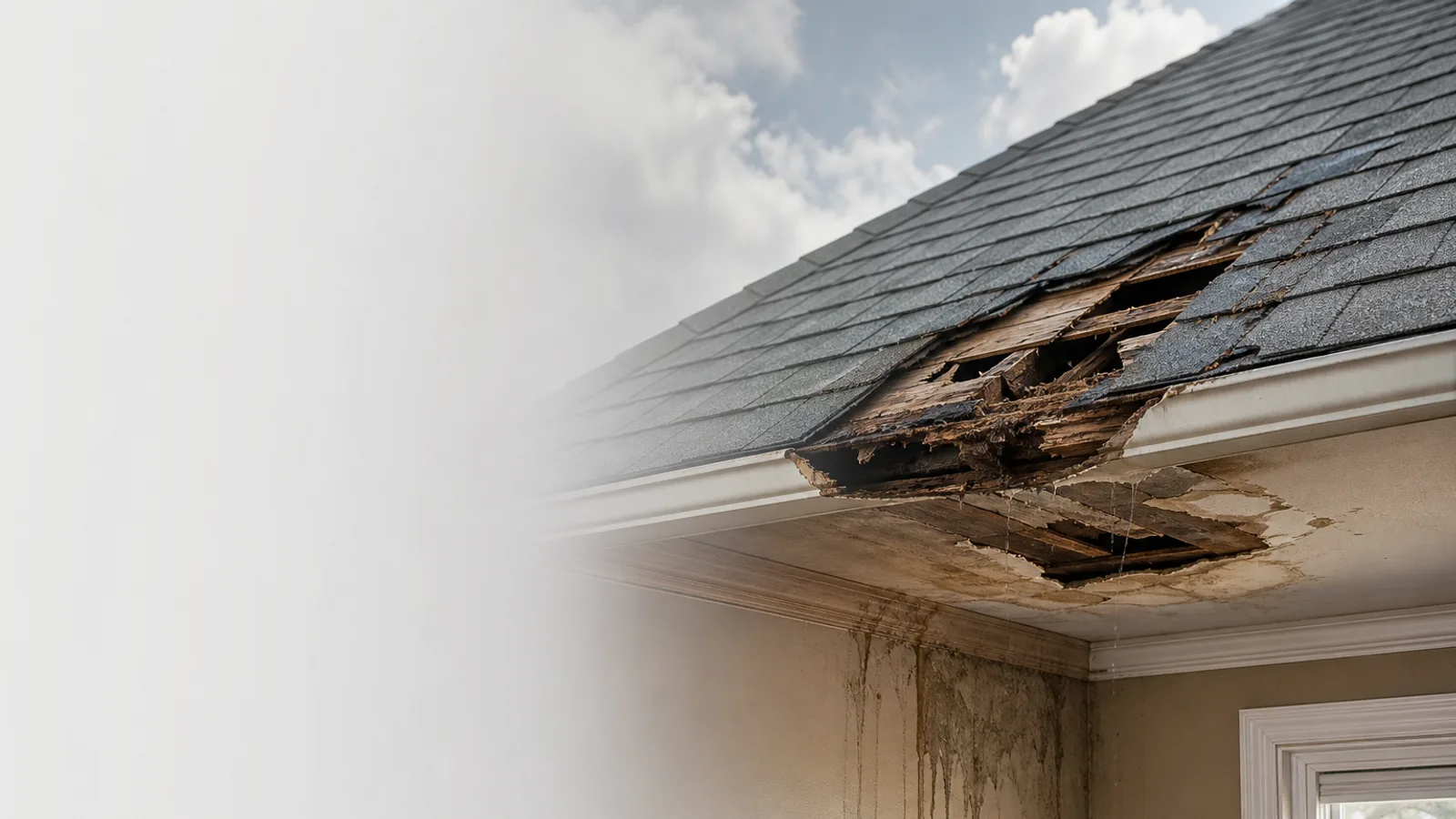
Most homeowners do not really know what is happening on or under their roof until there is a leak. Here are the common mistakes that hide roof problems and how a real inspection helps you avoid surprise damage and bills.
Why not knowing your roof’s condition is more expensive than you think
The biggest mistake homeowners make with roof condition is simply not paying attention until water shows up inside. By the time you see a stain on the ceiling or a drip in the hallway, moisture has usually been working its way through shingles, underlayment, and decking for a while. Industry guidance from the National Roofing Contractors Association recommends inspections at least twice a year plus extra checks after severe weather, precisely because small defects are much cheaper to fix early than after they have spread.
Missing shingles, loose flashing, clogged gutters, or poor ventilation do not always jump out from the yard or driveway. On many roofs in Pennsylvania, New Jersey, and Maryland, you will not see anything from the ground even though fasteners are backing out or sealant is cracking. When you skip regular inspections and assume “no leak means no problem,” you give minor issues the time they need to turn into rot, mold, or saturated insulation. That is when repair scopes and costs climb, and it is also when some manufacturers may decide that a lack of maintenance has voided parts of your coverage.
What a real roof inspection covers that casual checks never do
Another common mistake is thinking that a quick lap around the house or a smartphone zoom picture is an inspection. A proper roof inspection is systematic. It looks at the roofing surface, flashings, penetrations, gutters and downspouts, and just as importantly, the attic and roof framing from the inside. Manufacturer education materials point out that problems like blistered shingles, granule loss, or soft roof sheathing are often subtle and only obvious when you are up close with trained eyes.
Professional standards from major inspection organizations also spell out that there are limits to what you can see without walking the roof and looking into the attic. Hidden issues such as moisture stains on decking, early mold growth, inadequate ventilation, or sagging rafters usually show up inside first. If you rely only on exterior viewing, you are basically inspecting half the system. A complete inspection for a Mid-Atlantic home should pull all of that together so you understand surface condition, drainage, and what is happening under the shingles.
- Roof surface: shingles or membrane wear, cracks, and missing material
- Flashing: around chimneys, walls, skylights, and vent pipes
- Drainage: gutters, downspouts, and valleys for clogs or ponding
- Attic: moisture stains, mold signs, and ventilation problems
- Structure: visible sagging, cracked members, or fastener issues
Why a general home inspection is not enough to judge roof health
Many buyers in Pennsylvania, New Jersey, and Maryland think the roof box checked on a general home inspection means they know the roof’s true condition. That is a costly assumption. Home inspectors typically follow standards of practice that allow them to inspect the roof from the ground, from a ladder at the eaves, or from a window if the roof is too steep or unsafe to walk. They are not required to clear snow or debris, pull up shingles, or give you a guaranteed remaining service life for the roof covering.
Some home inspection standards also make it clear that the inspector is not obligated to move insulation in the attic, test every fastener, or verify hidden components. That means small flashing gaps, early decking rot, or ventilation issues can easily be missed during a quick pre-sale walkthrough. A detailed roofing check is a different service entirely. It is more hands-on, focuses specifically on the roof system, and is the right tool if you are deciding whether a roof is solid, nearing the end of its useful life, or needs repair before you close on a property.
- Home inspections may be done from the ground or eaves only
- Inspectors are not required to walk unsafe or fragile roofs
- Reports often exclude precise remaining roof life estimates
- Attic and insulation may only receive a limited visual check
- Snow, leaves, or debris may stay in place during the visit
Ignoring the attic: the mistake that hides the worst roof damage
A lot of homeowners think roof condition is all about how the shingles look from the driveway. That mindset overlooks the attic, which is usually where the worst news shows up first. Building inspection experts point out that the attic can reveal water trails on the underside of roof decking, dark stains, or signs of mold that are not visible outside at all. You may also see evidence of condensation from poor ventilation, which weakens wood and shortens the life of the roof system.
In the Mid-Atlantic climate, where we have hot summers and cold winters, getting ventilation right is critical. If your attic traps warm, moist air, you can see frost or dampness on nails in winter and overheated shingles in summer. Both conditions can shorten roof life and contribute to premature failure, yet many people never glance into the attic until they are chasing a leak. Treat the attic as part of the roof, not a separate space, and you will catch problems in time for targeted repairs instead of full-scale replacements.
DIY inspections and skipped maintenance: how they really backfire
Another mistake is climbing onto the roof without training or proper safety gear and thinking a quick DIY patch is as good as professional work. Industry guidance warns against untrained homeowners walking on roofs, both for safety reasons and because an inexperienced person can damage fragile surfaces without realizing it. Stepping in the wrong spot on an aging shingle roof can break seals or crack tabs. On some low-slope systems, one wrong move can scuff or puncture material that was otherwise sound.
Skipping routine maintenance is just as risky. Major trade groups recommend inspecting roofs at least twice per year, often in spring and fall, and after severe storms. Letting debris build up in valleys or gutters, ignoring a small number of missing shingles, or procrastinating on resealing flashing are all ways to shave years off a roof’s service life. On top of that, many manufacturer warranties and workmanship guarantees assume that you are taking reasonable care of the system. If a later claim review shows clogged drainage and long-term neglect, you may get less help than you expected.
How to use a professional roof inspection to make smarter decisions
If you are buying, selling, or just not sure how your current roof is holding up, the way to avoid these mistakes is to schedule a focused inspection and understand its scope. A dedicated inspection should spell out whether the contractor will walk the roof, check all visible flashings, clean limited debris to see critical details, and go into the attic. Some firms also provide photos and a written summary that separates urgent issues from routine maintenance, which is especially helpful when you are budgeting or negotiating on a home purchase.
In Pennsylvania, New Jersey, and Maryland, weather swings, tree cover, and older housing stock mean roofs see a lot of stress. It makes sense to treat a roof inspection as recurring maintenance instead of a one-time event after storm damage. When you schedule a professional roof inspection you are buying information: a clear picture of what is fine, what needs a simple repair, and what may be approaching the end of its life. That knowledge lets you plan instead of react, and it keeps you from being surprised by leaks, mold, or last-minute repair demands during a sale.
- undefined
- undefined
- undefined
- undefined
- undefined
- undefined
- undefined
- undefined
Frequently asked questions
- How often should I have my roof inspected if there are no leaks?
- Industry groups recommend inspecting residential roofs at least twice a year, commonly in spring and fall, plus extra checks after severe storms. Even if you do not see leaks, those routine inspections catch loose flashing, minor shingle damage, and drainage issues before they turn into interior damage.
- Is a home inspector’s roof check enough when I buy a house?
- A general home inspection is a useful starting point, but standards of practice allow inspectors to view roofs from the ground or eaves and to avoid walking unsafe surfaces. They also are not required to predict exact remaining roof life. If you are serious about understanding the roof’s condition, an additional roofing-focused inspection is usually worth it.
- Do roof inspections include checking the attic?
- A thorough roof inspection should include the attic, because that is where hidden moisture, mold, condensation, and structural problems often show up first. However, not every inspection automatically goes into the attic, so you should confirm with the contractor that an interior review of decking, insulation, and ventilation is part of the scope.
- Can I inspect my own roof instead of hiring a pro?
- You can and should visually check your roof from the ground and peek into the attic for obvious issues, but walking the roof without training is risky for both you and the roofing materials. Professionals are trained to move safely, recognize early failure signs, and avoid damage, so a formal inspection is a better way to get a reliable assessment.
- Will skipping roof inspections affect my roof warranty?
- Many manufacturer and workmanship warranties assume you will perform reasonable maintenance, which often includes periodic inspections and prompt repairs of minor issues. If a future claim investigation shows long-term neglect, clogged drainage, or ignored damage, you may find the coverage is limited or denied.
- What should I expect from a professional roof inspection report?
- A good report should describe the roof covering, flashings, drainage, and attic conditions in plain language and note any limitations on what could be seen. It should separate urgent repairs from maintenance items and, when possible, include photos of key findings so you can clearly understand what is happening and plan your next steps.
Talk to All Pro Home Improvement and Roofing about roof inspection →