Fresh national data says the typical American roof is being replaced far sooner than most warranties promise and at a higher cost than a few years ago. Here is how those numbers affect when you should replace your roof in PA, NJ, or MD and how to budget for it.
What changed in the latest roof age and cost numbers for homeowners
If you are sitting under a 15 or 20 year old roof and telling yourself it has "plenty of warranty left," the newest national numbers should make you pause. A 2026 analysis of building permits found that across the United States, the typical home that has gone through more than one roofing job replaces its roof after a median of just 14 years, with half of jobs happening between about 7 and 20 years. That is a far tighter window than the 25 to 30 years most people associate with common asphalt shingles.
The same permit data shows the median house age at roof replacement is about 42 years. At the same time, an insurance analytics report looking at physical roof condition concluded that roughly 38 percent of American homes currently have roofs in moderate to poor condition, meaning visible wear that is already linked to higher loss costs. In plain terms, many roofs are used hard, replaced sooner than the brochure suggests, and a large share are already behind on maintenance. For owners in Pennsylvania, New Jersey, and Maryland, where weather can swing from heavy snow to summer hail, those national figures are a wake up call to look at age and condition together instead of assuming the roof will age gracefully to its rated lifespan.
- Median roof replacement happens around year 14 based on permit histories
- Many roofs show visible wear before reaching 20 years in service
- Roof condition, not just age, is linked to higher insurance loss costs
- Northeast homes tend to have older roofs than those in warmer regions
How the 14 year median replacement age should change your planning
Learning that the median roof gets replaced after only 14 years does not mean your roof will fail on its 14th birthday. It does mean you should treat the mid-teens as a planning trigger point instead of pretending replacement is a distant future issue. A national risk study on asphalt roofs reports that almost 29 percent of shingle roofs now have less than four years of useful life left. That is a huge chunk of the housing stock, and many of those owners likely still think of their roofs as "middle aged."
If your roof in PA, NJ, or MD went on around 2008 to 2014, the statistics say you are in the range where many neighbors are quietly filing permits or insurance claims. You do not see that from the street, but the data shows the cycle. The smart move is to use those years to line up inspections, compare scopes, and start saving toward a realistic project budget instead of waiting until you wake up to a leak in the bedroom ceiling. With repair costs also rising, catching issues while you still have some remaining life often means smaller, more targeted work instead of an emergency tear off.
- Treat year 12 to 15 as your early planning window for replacement
- Schedule inspections before, not after, you see interior leaks
- Use age plus visible wear to decide between repair and replacement
- Expect timelines to tighten during regional storm or hail seasons
Why replacement and repair both cost more than a few years ago
Cost is where recent reports get blunt. Nationally, an insurance and roofing market study found that the average residential roof replacement hit about $17,631 in 2025. That figure is roughly one third higher than the average from 2021 through 2024. Repairs followed the same direction, with the average roofing repair job climbing to around $4,699. What makes this more striking is that overall roof claim counts dropped by about 20 percent in the same period, even as the price per job kept rising.
The trade press that reviewed this data points to material cost inflation outpacing labor inflation. Across the country, roofing material prices grew faster than installation wages, and those increases filter straight into homeowner invoices. For you as a homeowner in the Mid Atlantic, the lesson is simple. Waiting does not mean you will catch a sale on a new roof in three years. The broader trend is that both full replacements and serious repairs are getting more expensive over time because shingles, underlayment, and accessories cost more to manufacture and move. When you budget, anchor your expectations closer to current averages than to what neighbors paid five or ten years ago.
- Average roof replacement cost rose to about $17,631 in 2025
- Average repair cost climbed to roughly $4,699 over the same period
- Roofing material price increases are a major driver of higher totals
- Claim counts went down even as cost per job went up significantly
What aging roof statistics mean specifically for PA, NJ, and MD homes
The national numbers are one thing, but climate and housing stock vary widely. The latest roof condition report breaks roofs down by region and shows that the Northeast has a higher share of older roofs compared with some southern states. Only about 14 percent of roofs in that study’s Northeast region fall into the very new 0 to 4 year bracket, while roughly 18 percent are 31 years old or more. That tilt toward older roofs lines up with what we see in many Pennsylvania and New Jersey neighborhoods loaded with housing from the 1960s through the 1990s that may have already had multiple layers over the years.
Maryland sits at a crossroads. Western and central Maryland see snow and freeze-thaw, while coastal counties see wind and driven rain. Combined with the broader Verisk finding that 38 percent of homes nationwide have roofs in moderate to poor condition, Mid Atlantic owners should assume the risk picture is not better here than the national average. Older roofs in harsh microclimates tend to develop small weaknesses that hail, ice, or wind then exploit. Planning for roof replacement before your shingles are clearly in the "poor" category gives you more say in timing, scope, and crew scheduling.
- Northeastern states have a larger share of older, 31 plus year roofs
- Weather swings in PA, NJ, and MD speed up shingle wear and tear
- Layered over roofs from past decades may hide underlying deck issues
- Regional aging trends suggest proactive planning, not last minute fixes
How to read your own roof against the new risk and age data
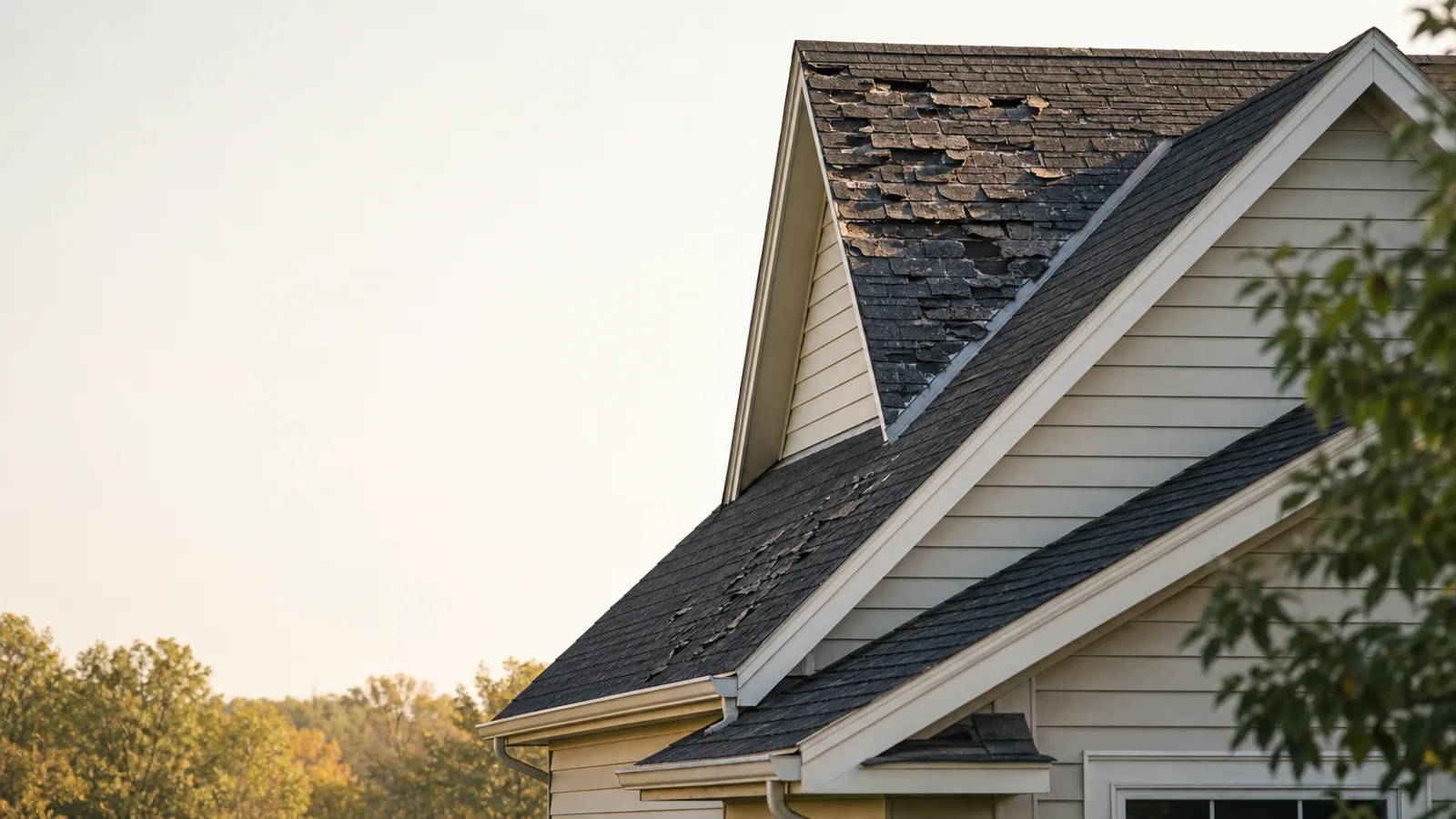
Statistics are useful, but you still need to translate them to the roof over your head. When risk analysts say nearly 29 percent of asphalt shingle roofs have less than four years of useful life left, they are working with big data on age, material, and condition. On your home, the clues are more straightforward: shingle edges curling or cupping, granules piling in gutters, exposed nail heads, cracked or missing pieces, and flashing that is pulling away or rusty. A roof can technically still be "on" the house for years while already being in the moderate to poor category that drives up loss costs.
The reports also show that roofs in worse condition suffer about 50 to 60 percent higher loss costs when bad weather hits, compared to roofs in good shape. Loss cost is insurer language, but in your world it is the difference between a quick patch after a storm and full interior repairs plus a rushed new roof. If your roof is in its teens or early twenties and showing several of those wear signs, the combination of age statistics, higher average costs, and greater weather vulnerability points in the same direction: you should be evaluating full system replacement on your schedule, not waiting for your insurer or a leak to force the issue.
- undefined
- undefined
- undefined
- undefined
- undefined
- undefined
- undefined
- undefined
Frequently asked questions
- How long does a shingle roof really last according to new data?
- Recent permit analysis shows that among homes which have gone through more than one roofing job, the median interval between replacements is about 14 years, with many jobs happening between 7 and 20 years. That is shorter than typical marketing claims for 25 to 30 year shingles. In practice, weather, ventilation, and installation quality often pull the real world lifespan down from the theoretical maximum.
- Is it normal to replace a roof at 15 years even if the warranty is longer?
- Based on the newest national numbers, replacing a roof in its mid teens is more common than most homeowners think. The data indicates that by 14 years many roofs have reached the point where condition and risk justify full replacement, especially in harsher climates. If an inspection shows curling, granule loss, and flashing issues, a 15 year replacement can be a rational decision even if the printed warranty runs longer.
- How much should I budget for a roof replacement today?
- A recent national roofing cost report puts the average residential roof replacement at about $17,631 for 2025. Local prices in Pennsylvania, New Jersey, and Maryland will vary with roof size, pitch, layers to tear off, and material choices, but this gives you a ballpark starting point. Because material costs have been rising faster than labor, planning a budget slightly above the current average is safer for projects you expect to do in a few years.
- Is it cheaper to keep repairing an old roof instead of replacing it?
- On paper, a repair invoice is smaller than a replacement, but the latest cost data shows average repairs are already running around $4,699 nationwide and rising. If you have to repeat those repairs every season on a roof that is already in moderate to poor condition, the total can approach the cost of a full replacement while still leaving you exposed to leaks. An honest inspection can help you decide whether another repair buys meaningful time or just delays the inevitable.
- How do I know if my roof is in the moderate to poor condition risk category?
- National condition studies define moderate to poor roofs as those with visible defects like missing or broken shingles, significant granule loss, exposed nails, damaged flashing, or obvious sagging. These roofs were linked to loss costs roughly 50 to 60 percent higher than roofs in good condition during storms. If you or an inspector see several of those signs on a roof that is also older, it likely falls into that higher risk group.
- When should I start getting quotes if my roof is over 20 years old?
- Given that the median replacement age is now just 14 years and a significant share of roofs over 20 years are in the oldest age bracket, it is wise to start getting quotes as soon as possible once your roof passes 20. That does not mean you must sign a contract tomorrow, but you should understand current pricing, scope, and scheduling constraints. Starting early lets you compare contractors and materials without the pressure of an active leak or storm claim.
Talk to All Pro Home Improvement and Roofing about roof replacement →